



A Growing Symphony of Change in Colombia
We invite you to enter this experience and discover how a strong and healthy ecosystem of relationships, ideas and practices can set off a chain of change — one that gives rise to outcomes we could not have fully predicted, and whose impact continues to grow, evolve, and outlast the original spark that set it in motion.
A Growing Symphony of Change in Colombia
Introduction
Eighty years ago, nations came together around what was once a collective dream of international cooperation – a vision that became the United Nations. The UN Charter has endured through generations as a shared commitment to building better futures for people and planet, a bold idea that continues to drive us to push for change.
Marking this 80th anniversary, UN Global Pulse Finland reflects on five years since a small seed of participatory foresight was planted with UNFPA Colombia. Launched in 2020 as an experimental training to democratise policy-making, the initiative took fuller shape in 2023 as Tejiendo Futuros: a 21st-century embodiment of the UN’s founding principle, “We the peoples,” connecting communities and institutions around shared aspirations across Colombia.
What started as a pilot to democratise policy-making — inviting historically underrecognized communities to shape Colombia’s National Development Plan — has since taken root as an adaptable participatory methodology that is reshaping how institutions and communities imagine, plan, and build futures together.
To understand impact in the realm of multilateralism, we need more than numbers or isolated results. It requires looking closely at how trust is built across institutions and communities, how tools are adapted over time by partners, and how new strategies emerge through collaboration. Deep, transformative change rooted in participation and mindset shifts unfolds gradually — and often informally. That’s why we returned to this project five years later: to understand not only what changed, but how and why.
This digital storytelling journey is the result of a long-term investigation led by UN Global Pulse’s Monitoring, Evaluation and Learning (MEL) and Creative Communication and Design teams, driven by a commitment to more accurate, meaningful and equitable stories of change. It reflects our ongoing effort to experiment with new ways of understanding complex, real-world impact within the UN system (check our latest exploration on how to evaluate and communicate change more effectively).
Recognising that the most significant changes across those five years unfolded in the relationships, decisions and adaptations behind the scenes — and that a rigorous understanding of impact must do justice to both institutional change and lived experience — UNGP teams adopted a Narrative Assessment approach. Rather than relying only on indicators or aggregated trends, this methodology traces how people who drove the work forward interpreted and navigated the journey to validate key events, decisions, challenges, and unintended outcomes – by triangulating their stories and timelines with multiple sources and stakeholders.
For practitioners interested in replication, Narrative Assessment provides a rigorous, evidence-based way to surface decision-making processes and change dynamics that are not easily captured through indicators alone. It is particularly suited to participatory and systems-change initiatives where impact materialises through gradual mindset shifts, institutional learning and evolving collaborations.
The story presented here offers an evidence-based reconstruction of change pathways: how tools were adapted, how buy-in was negotiated, where political windows emerged, which contextual factors enabled or constrained progress, who made it possible — and why certain shifts have proven durable.
Most importantly, it amplifies the many voices and dreams that have sustained this ecosystem, allowing collective ideas to grow into a forest of possibilities.
Our heartfelt thank you to: Alexis Damancio Silva, Andrea Camila Lamprea Rodriguez, María José David-Guevara, Yaddi Miranda Montagut, Jimena Califa, Claudia Sáenz Zulueta, Keepa Maitri Tuladhar, Anna-Marie Zylicz, Babusi Nyoni, Felipe Acero, Ariana Monteiro, Lauren Parater, and Shanice da Costa. Without you, this story wouldn’t exist.
1
First Movement – Sonata-Allegro: Setting the Themes
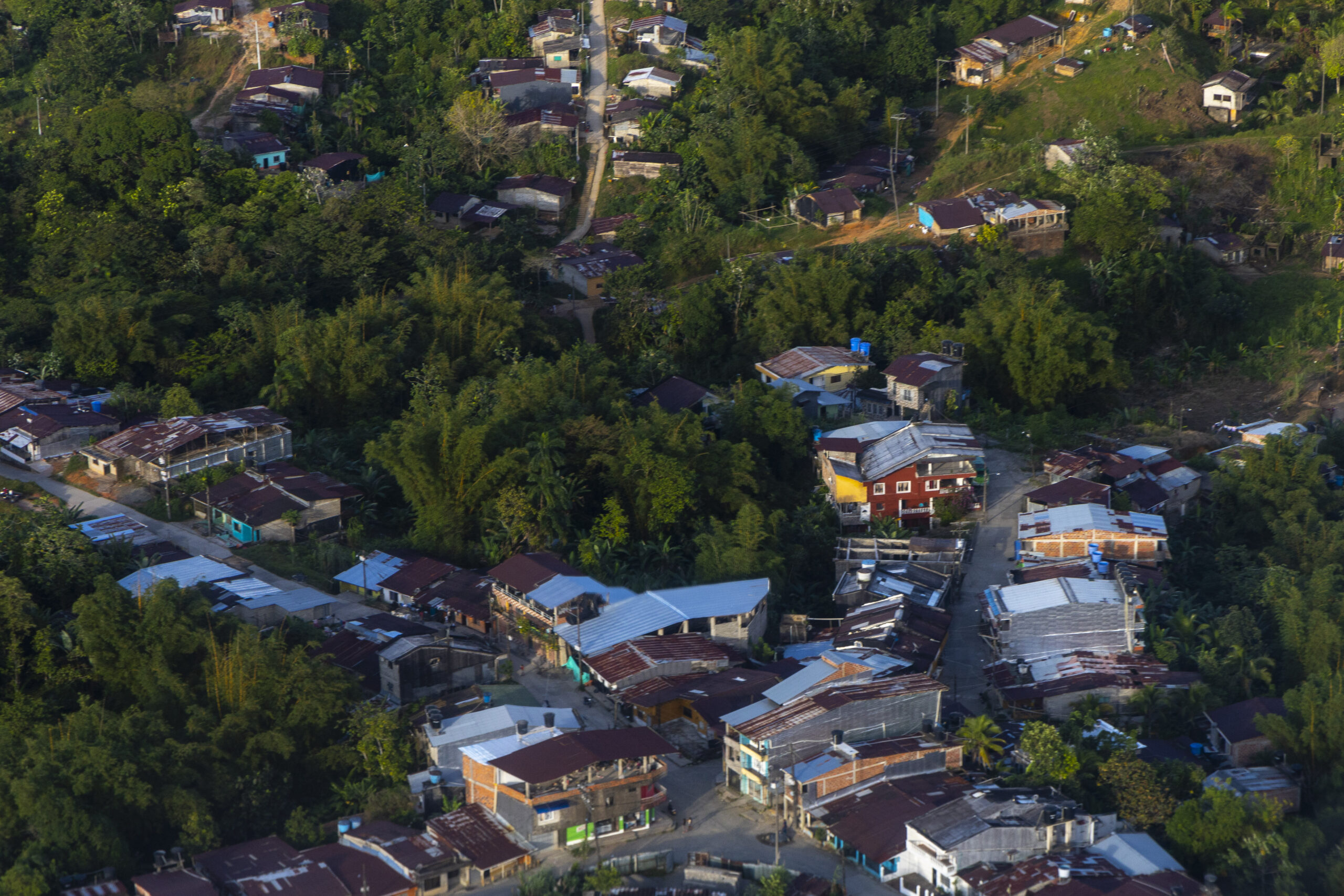
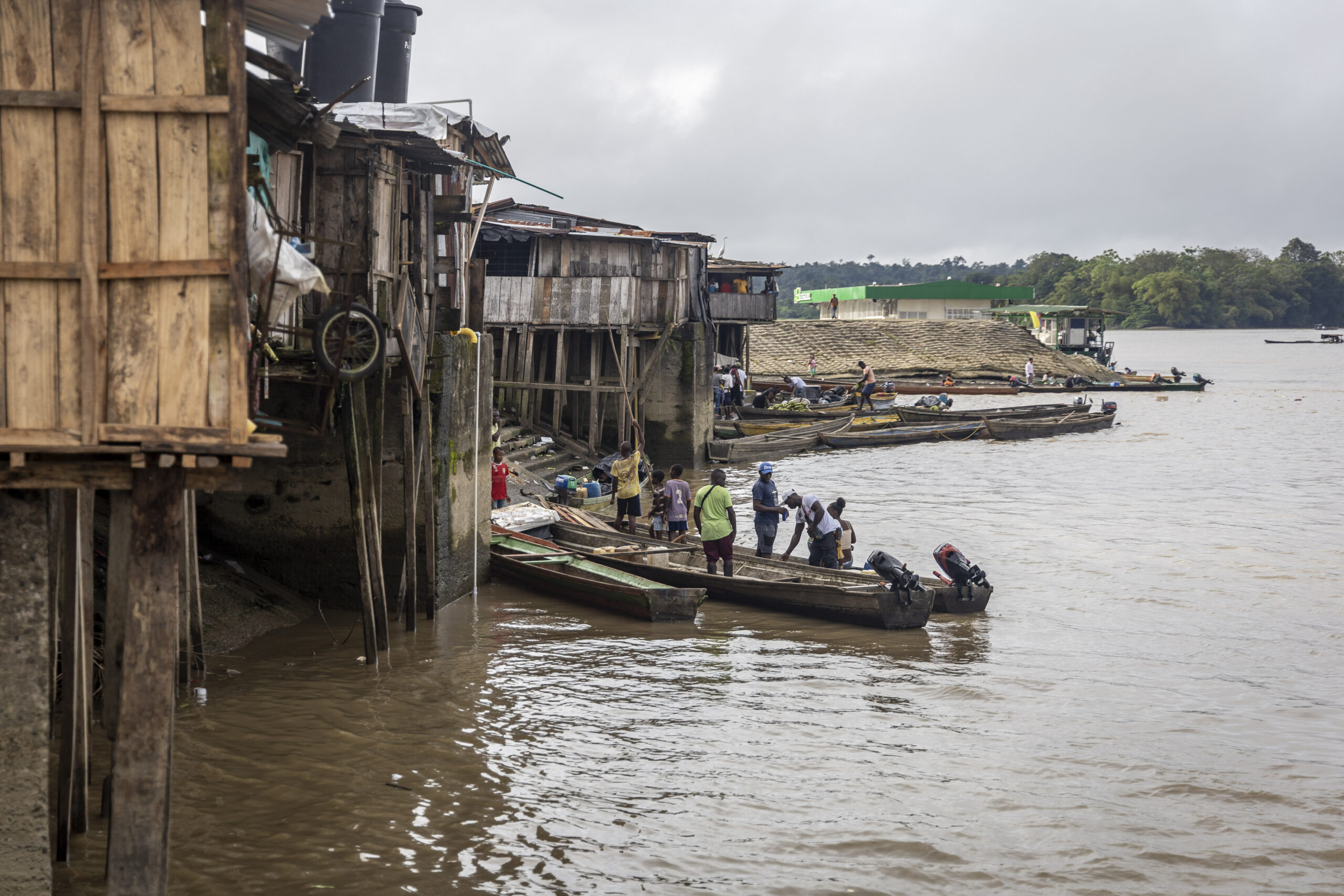
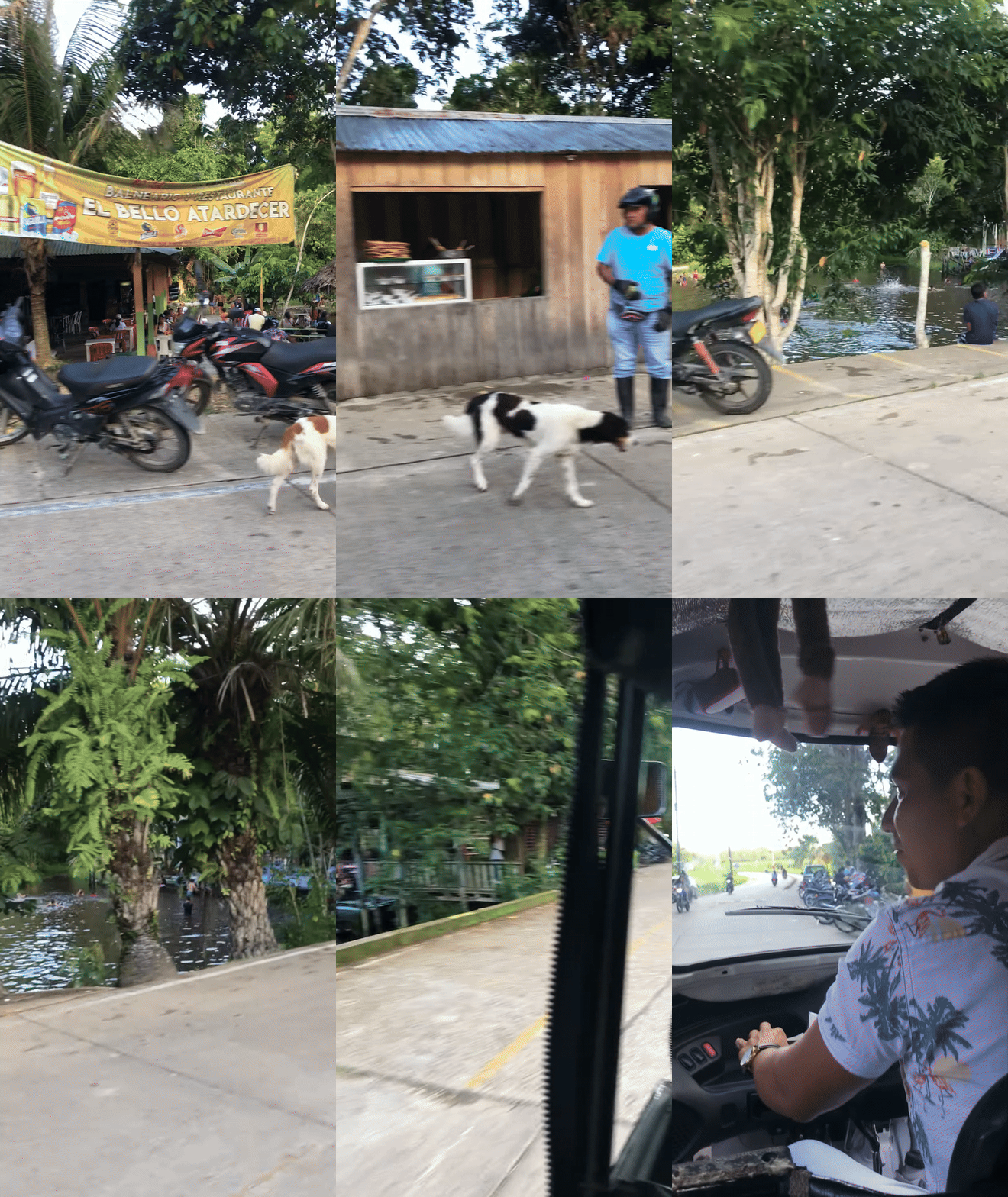
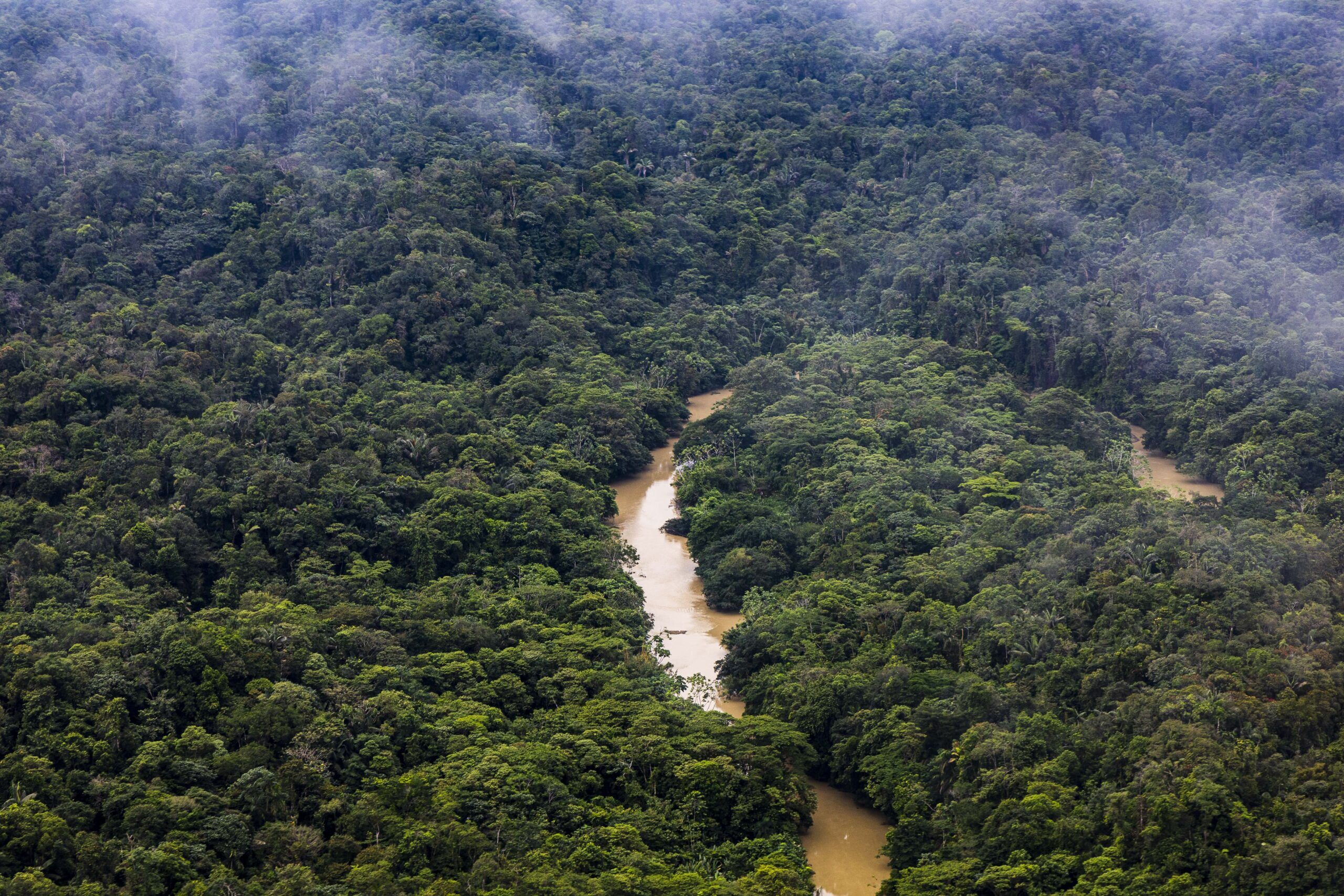
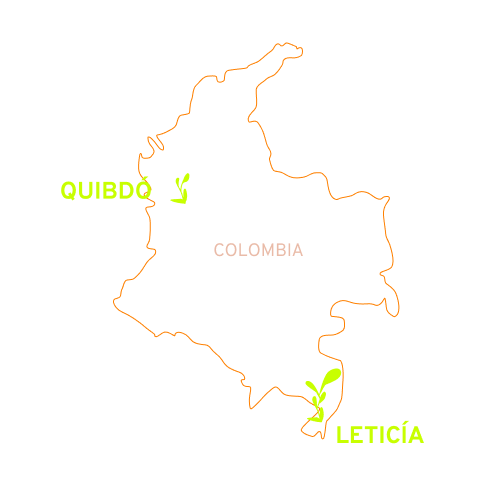
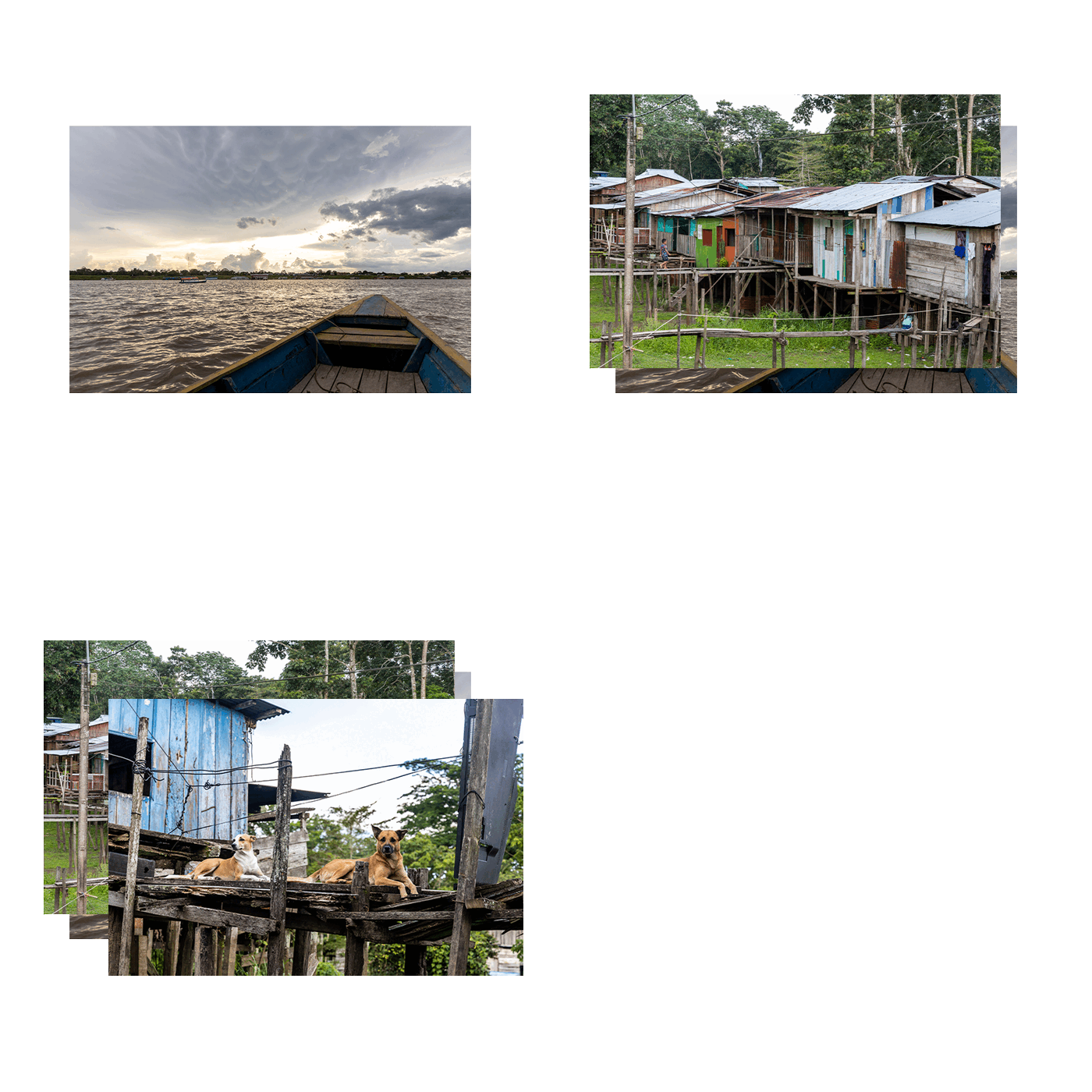
This is a story about lively encounters and transition zones along borders. More precisely, it begins in Leticia, where Colombia, Brazil and Peru meet through the wholeness of the Amazon Rainforest — and then moves to Quibdó, in Colombia’s Pacific Region, nestled along the majestic Atrato River, recognized as a living entity with rights and surrounded by the Chocó rainforest.
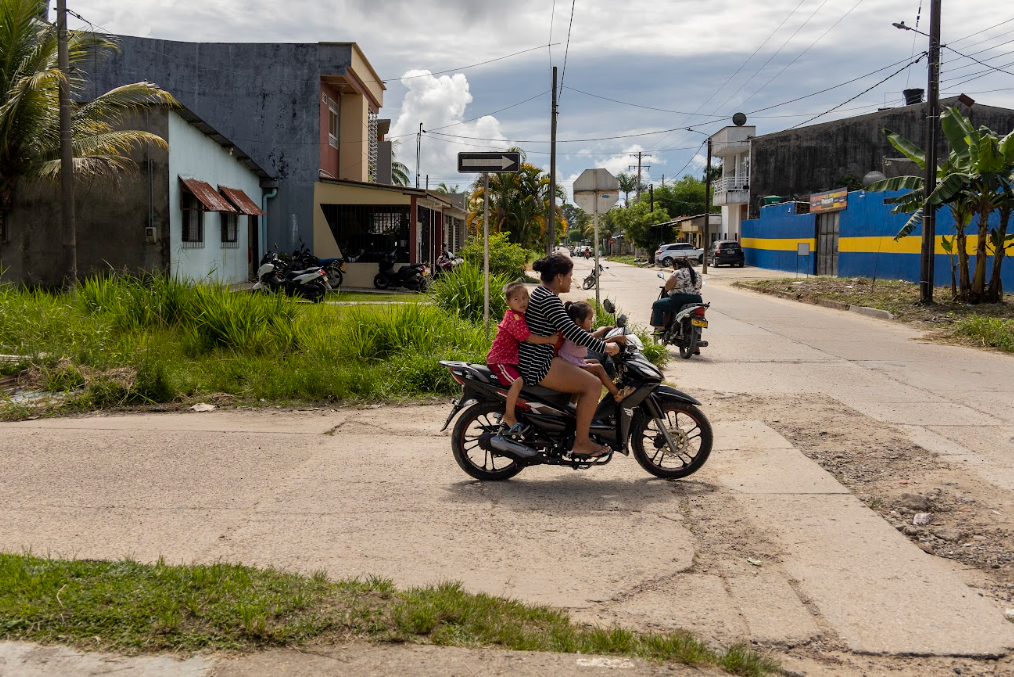
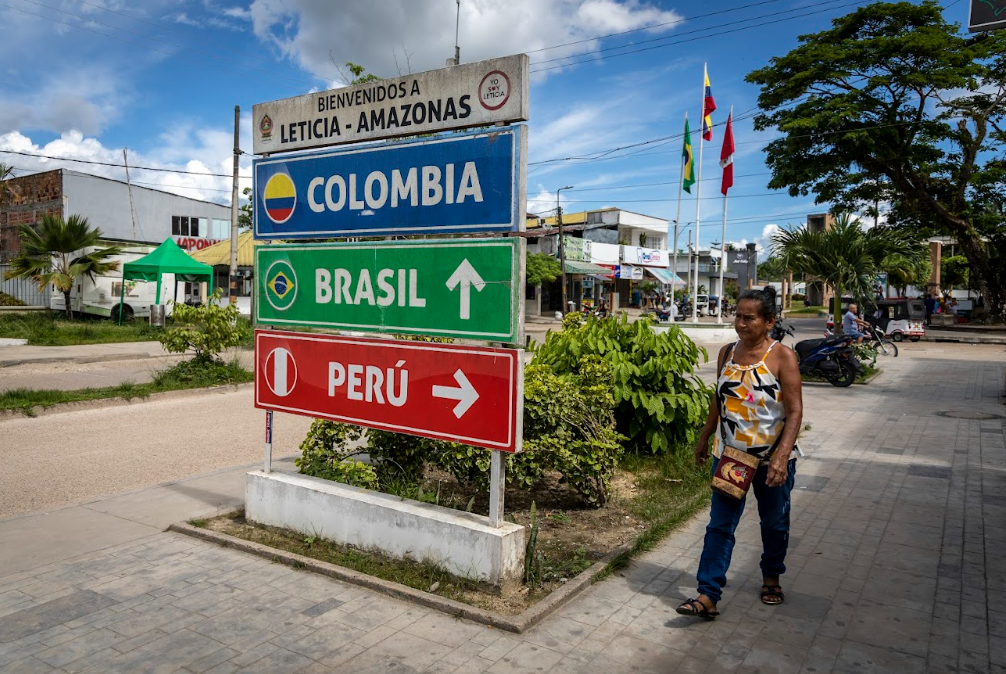
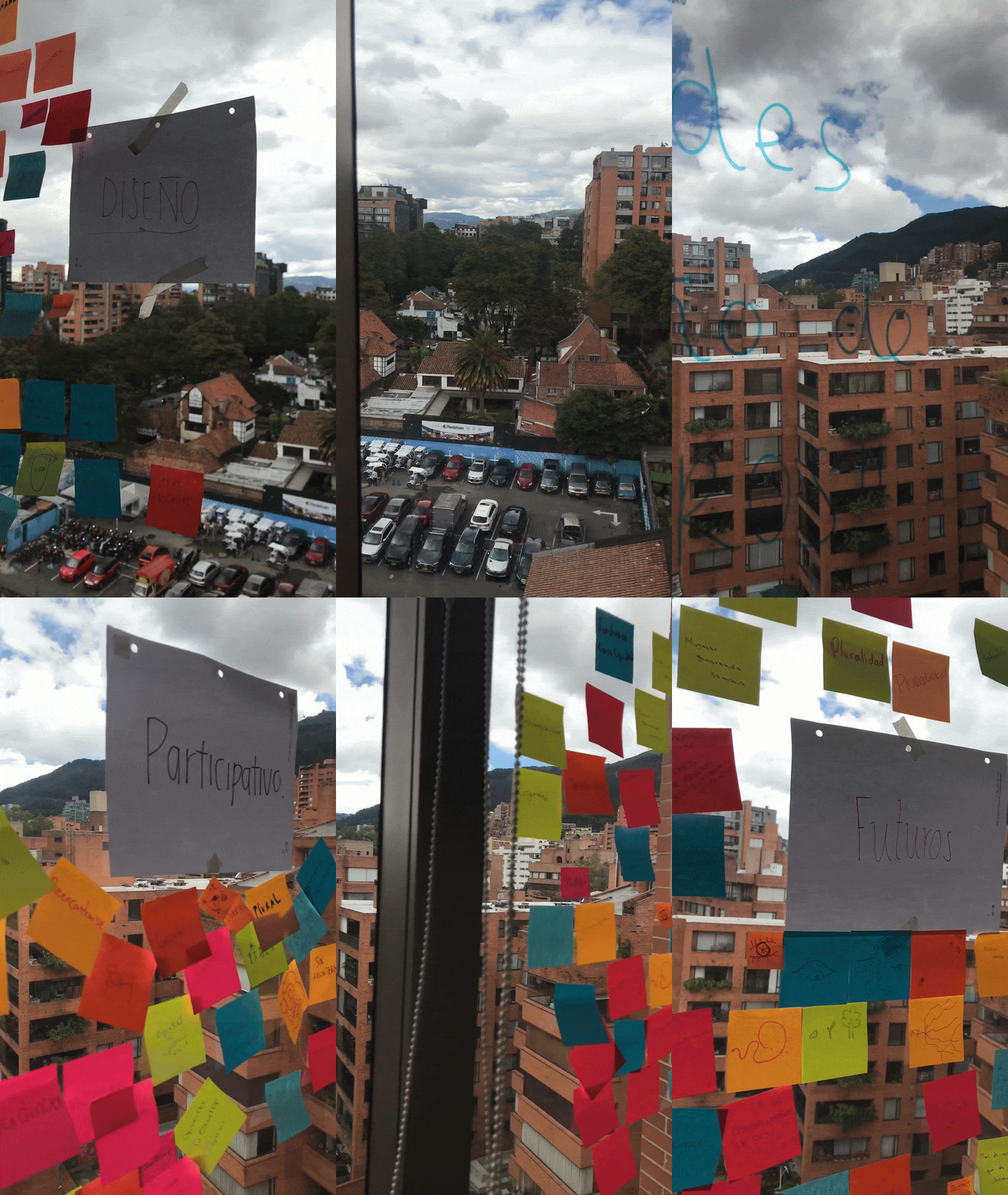
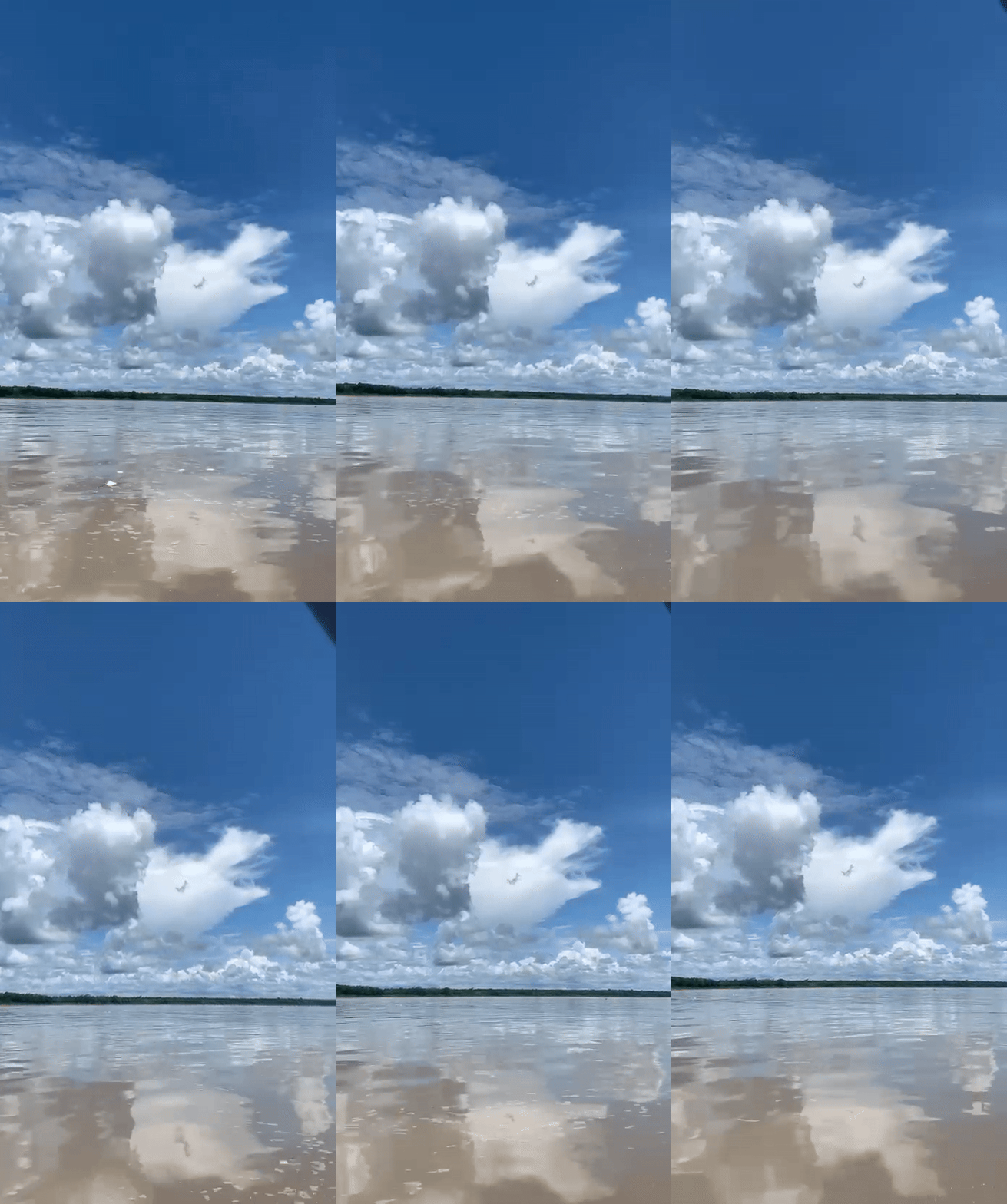
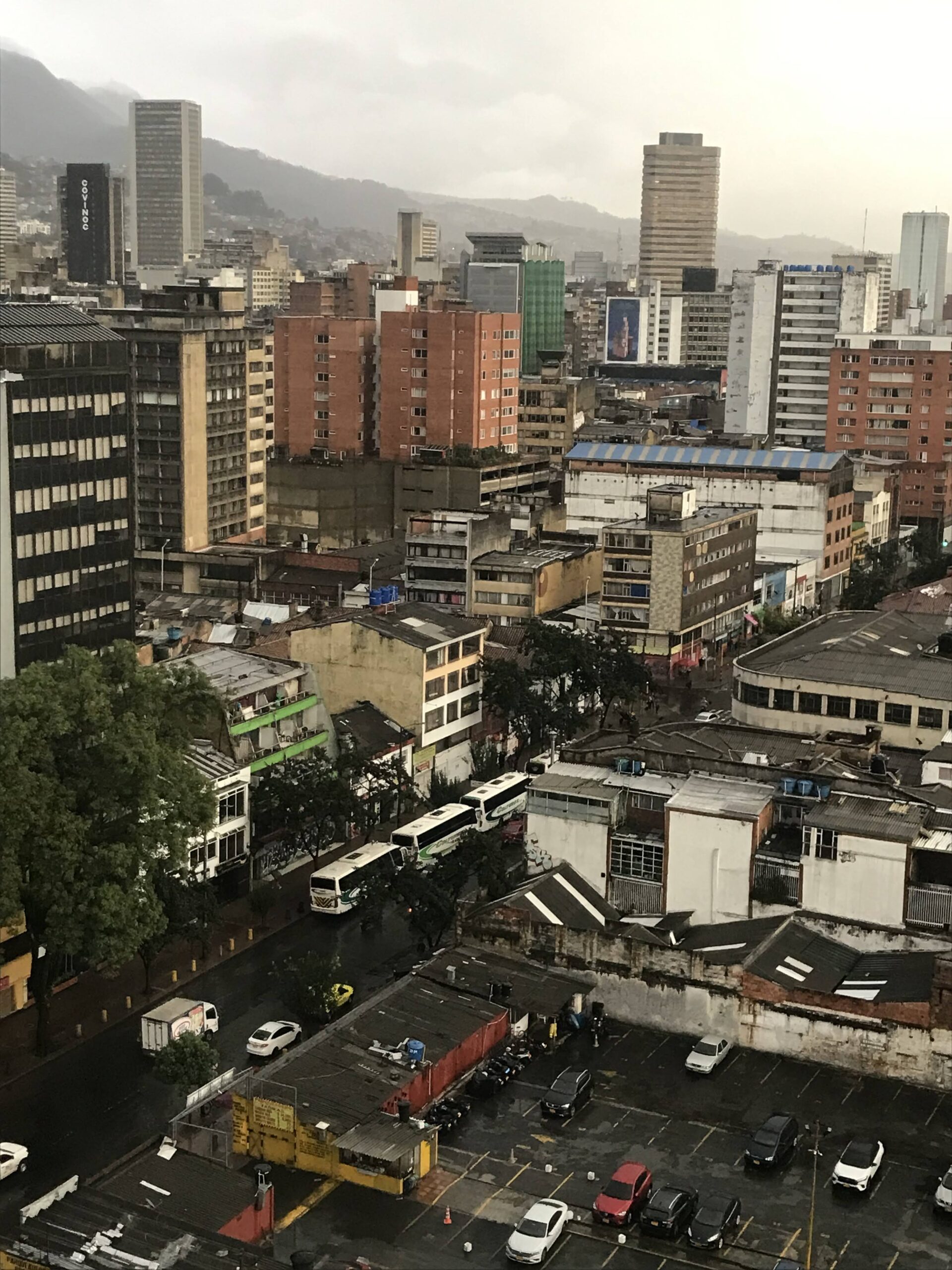

Images: ©UN Global Pulse
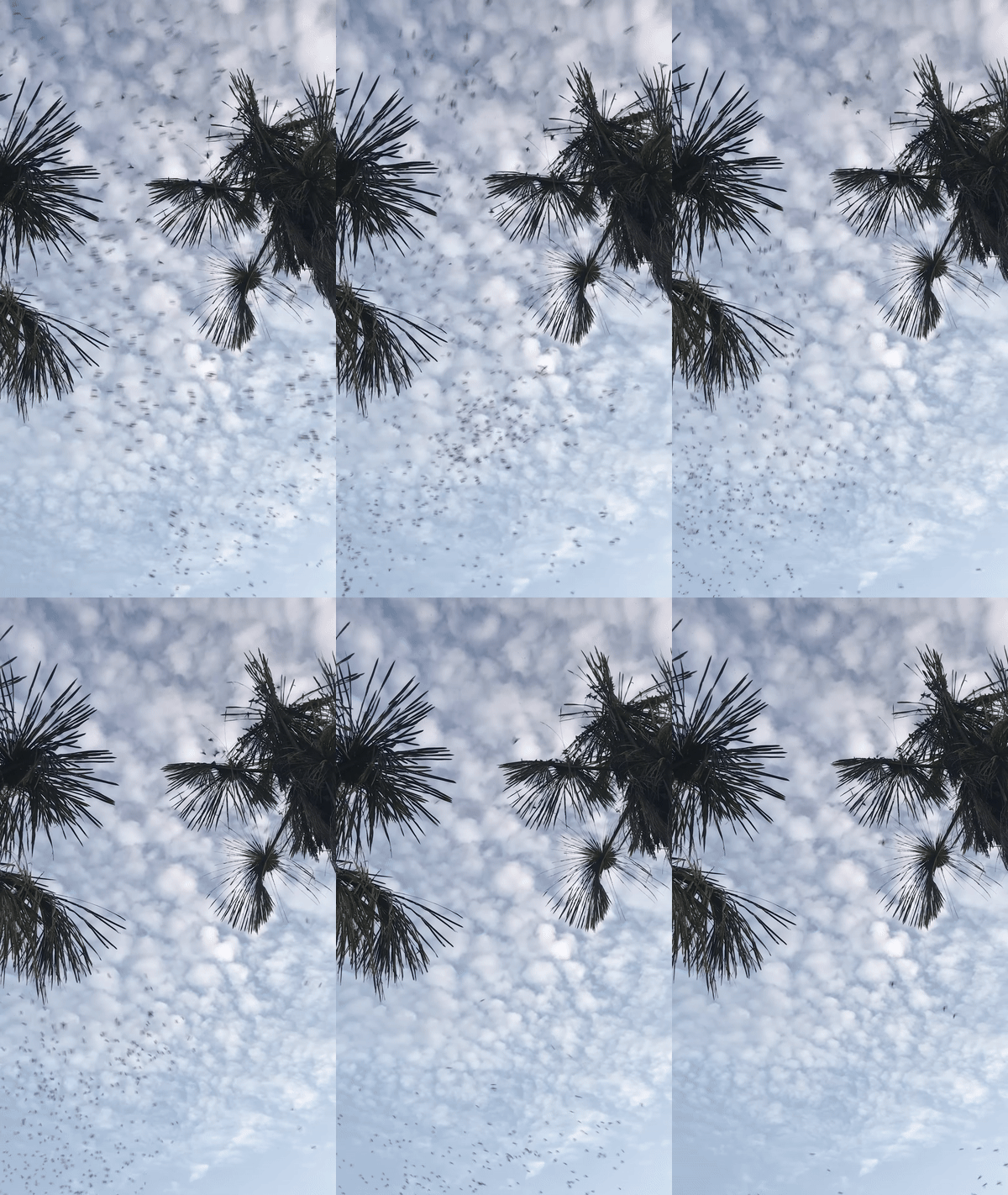
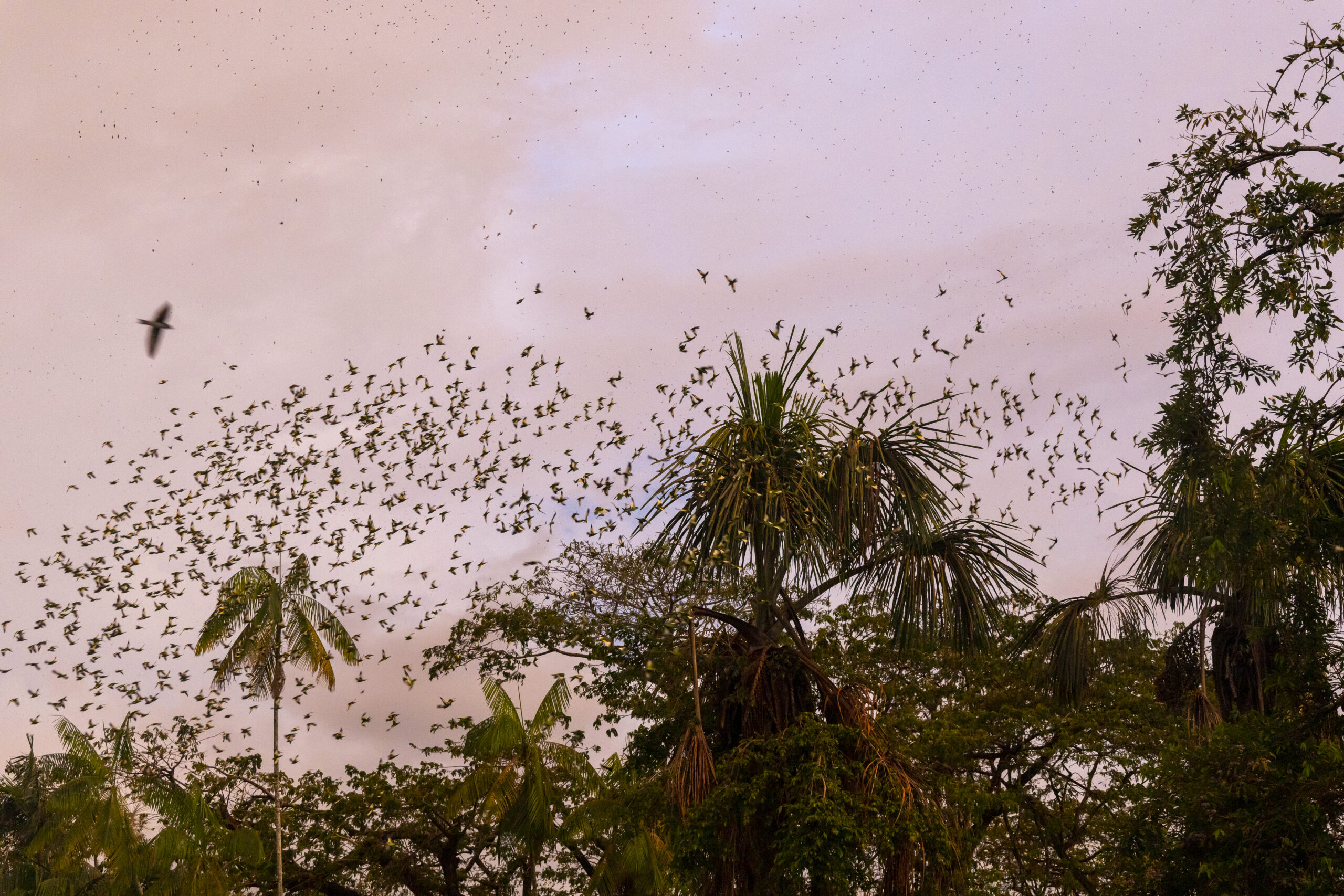
Rainforest cities move like symphonies composed of coexisting systems, where urban environments intertwine with vast masses of green woven along rivers and cultural landscapes. The forest’s colossal presence sets the pace of life, while making space for a multitude of life forms to take shape. You notice the sound of water running in the background, the hum of a passing insect, the rush of beating wings. But also boat motors approaching, dogs barking at motorcycles, music floating in from all directions, and people making plans to meet after the rain stops or when the sun cools down. Yet more often, what reaches you is not a collection of individual notes, but a single, intricate composition: a living harmony shaped by the interplay of countless species at once. Scientists see these layered sounds as communication networks that reveal how species survive and ecosystems thrive.
Listen to some sounds of the environment
Audio: ©Freesound
The encounters and dialogues that unfolded in Leticia and Quibdó formed the chorus of this living orchestra: one that, when listened to closely, reveals desires, rhythms, and possibilities to reimagine how communities and institutions can listen to one another, understand each other, and co-create positive change that, over time, can spread across territories.
The seed of foresight in Colombia was first planted in the urgency of a global pandemic. In 2020, the crisis exposed how unprepared institutions were for the unexpected, becoming a turning point for the rise of foresight as a tool to support organizational change.
“At that time, foresight methodologies were becoming more popular due to the pandemic, as we are not ready for the future and unexpected events that can happen. So during the lockdown, the UNFPA innovation team started to be more interested in learning about foresight. We knew that UN Global Pulse had this foresight unit, and we reached out to them through the Innovation Unit at UNFPA.” — Yaddi Miranda Montagut, Innovation Specialist, UNFPA Colombia
2020 was a moment of global uncertainty but also widespread solidarity. Bringing together organizations through creative partnership efforts not only focused on immediate response to the impacts of COVID-19 but to develop capabilities to help navigate the future through better policies and approaches.
This creative tension sparked new ways of thinking about planning itself. UN Global Pulse partnered with the United Kingdom’s not-for-profit School of International Futures and the International Training Centre of the International Labour Organization (ICTILO) to conduct project-based training: Foresight For Systems Change, tailored for UN entities to learn and apply foresight to improve strategy, policy, and innovation. What began as a training for UN agencies opened up to include Colombia’s National Planning Department (DNP) by invitation from UNFPA, who partnered to co-developed an experimental methodology.
“So it was the match between the public innovation team and Global Pulse. And then they started to build this specific project at the end of the training, like a pilot. And it was no more than a pilot at that moment… but we kept thinking: what would happen if we take this methodology? If we use foresight and try to build like a more participatory planning at the country level?” — Andrea Camila Lamprea Rodriguez, Superintendencia de la Economía Solidaria, Colombia Government
From the outset, this was not just a technical collaboration — it was a philosophical one. It required reconciling different worldviews: strategic foresight driven by institutional structures, and participatory foresight grounded in community rhythms and lived experience.
“We had the Future Triangle, the Horizon Scanning, that is, it was what they had taught us during the training, but we didn’t want to be so rational, especially at the moment, when talking about futures. And we wanted to have a plurality of future visions. So I think that there was a point where things started to change a little bit. We reached out to Claudia and Jimena, who had a lot of experience with participatory methods at the global level, gamification, etc and shared our desire to flip the methods to participatory foresight and from there it was like us co-developing and changing the focus with their guidance, little by little.” — María José David-Guevara, check title, UNFPA Colombia
The ambition was bold: integrate participatory foresight into Colombia’s National Development Plan. More than 250,000 citizens would go on to participate in Colombia’s national consultation. A new cadence was taking hold — one that allowed multiple actors to co-compose the country’s development strategy from the ground up.
Just as a symphony’s first movement introduces themes that will reappear in transformed ways, the early collaborations between UN Global Pulse, UNFPA, and the Colombian government set the groundwork for what would later take shape in Leticia and Quibdó.
The next movement explores how these ideas were not only carried forward, but translated, embodied, and reshaped through real-world territorial practice.
2
Second Movement – Slow and Lyrical: Listening and Deepening
In many South American cosmologies, balance is not merely ecological: it is a spiritual and collective commitment. Every being holds purpose, with its own role in sustaining life and transmitting the cultural, historical, and aesthetic values of the territory over time. These are lands where nature-based traditions and knowledge continue to guide collective well-being, and where resilience is deeply rooted in ancestral worldviews.
Leticia and Quibdó were not chosen at random. They were selected because they embody this resistance and wisdom. Leticia, in the heart of the Amazon, is one of the most ethnically diverse regions of the continent. Ancestral home to the Yagua, Ticuna, Cocama, Yacuna, and many other Indigenous Nations. Quibdó, located along the sacred Atrato River, holds the second-largest Afro-descendant population in Latin America, the vibrant epicenter of Afro-Colombian identity and pride. Both territories have long protected Colombia’s cultural and natural wealth through autonomous development and traditional stewardship — and yet, have historically been under recognized in national policymaking.
During our time in these places, we came to understand how the Blue Morpho butterfly and the Toucan are seen as guides of positive change. The butterfly moves close to the forest floor, pollinating with precision and announcing the arrival of new knowledge. The toucan flies far and wide, dispersing seeds across distances and carrying lessons about spiritual connection and territorial care. Each plays a complementary role, one local and grounded, the other expansive and connective. Together, they sustain the forest’s renewal.
The rare appearance of a Blue Morpho butterfly is believed to reveal hidden truths of the world and reflect localized ecosystemic harmony.
Toucans are seen as living repositories of wisdom, facilitating forest expansion and large-scale genetic flow.
Their interconnected seed-dispersal patterns maintain the rhythmic renewal of the forest, serving as bioindicators of the ecosystem’s health.
In our story, Claudia and Jimena reflected this same balance. They didn’t arrive with a fixed method, nor did they lead from the front. Instead, they listened, attuned to context, and helped shape the conditions in which transformation could unfold. Like conductors guiding a growing symphony, they moved with care. Sensing when to step in, when to step back, and how to hold a shared rhythm of cooperation.
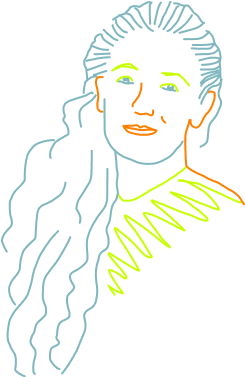
Meet Jimena Califa
As a foresight practitioner with a background in service design and experience across multilateral organizations and civil society, Jimena brought the precision of grounded design to the participatory process of Tejiendo Futuros. She led the co-design of the methodology, ensuring it remained practical, inclusive, accessible, and deeply rooted in the lived realities of participants.
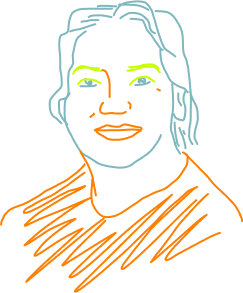
Meet Claudia Saenz
As Strategic Foresight Senior Analyst at UN Global Pulse, Claudia led the overall coordination of the project, holding the connective thread that wove institutions and communities together. Her ability to bridge formal frameworks with local worldviews was key to shaping a shared vision — drawing on creative and decolonial practices to nurture collective well-being and an attentive, relational pace.
Each workshop, feedback loop, and design session contributed to a flexible approach grounded in ethical participation, respect for diverse knowledge systems, and a commitment to learning. Under Claudia and Jimena’s facilitation, Tejiendo Futuros took shape in 2022 as a co-developed toolkit, fruit of an iterative methodology rooted in ethical participation, cultural sensitivity, and trust.
As Benjamin Zander reminds us, “The conductor of an orchestra doesn’t make a sound. He depends, for his power, on his ability to make other people powerful.”
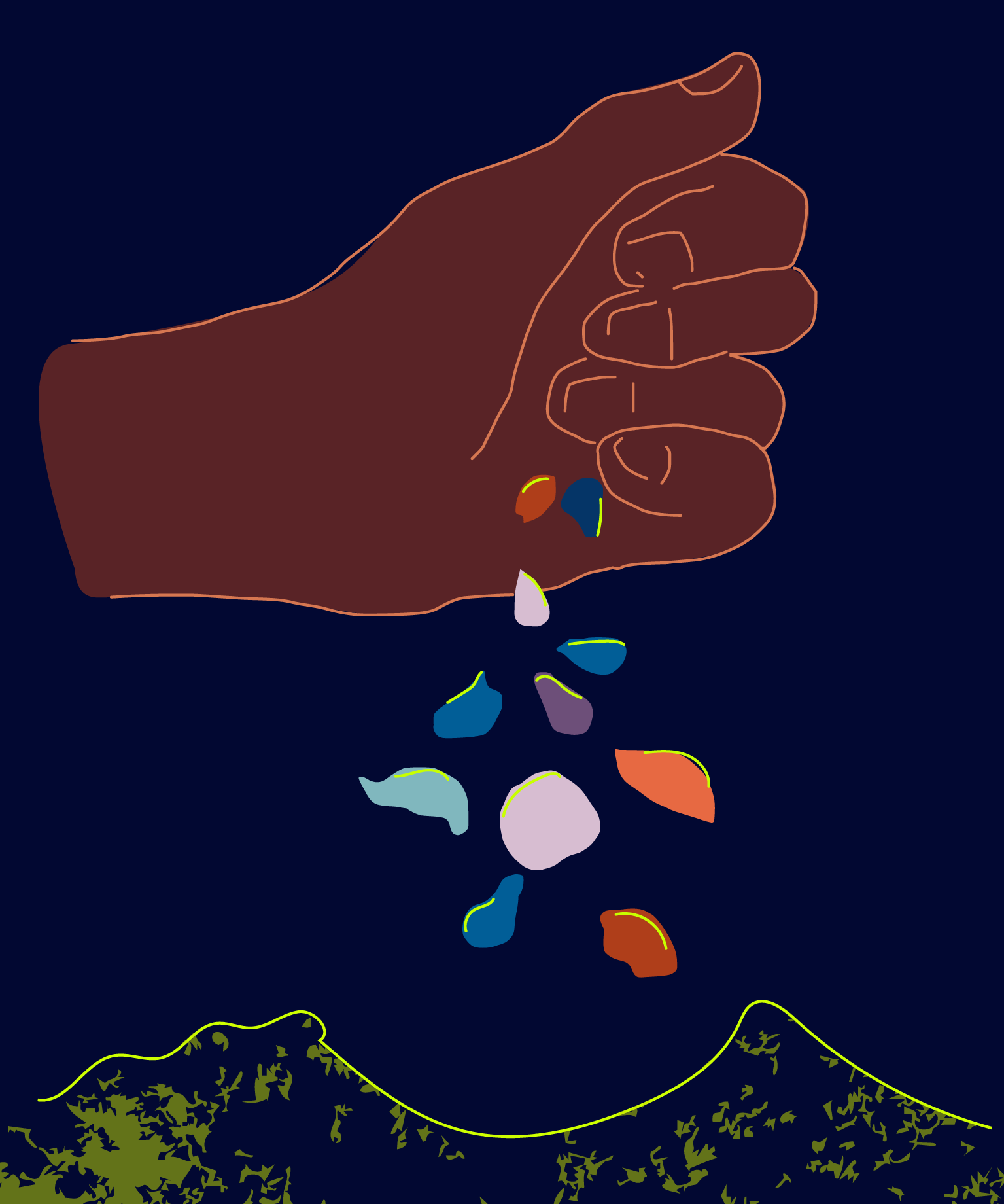
What follows is a set of eight principles that reveal how impact was nurtured throughout this process. These are not fixed steps, but living elements shaped through reflection, experimentation, and collective improvisation.
5
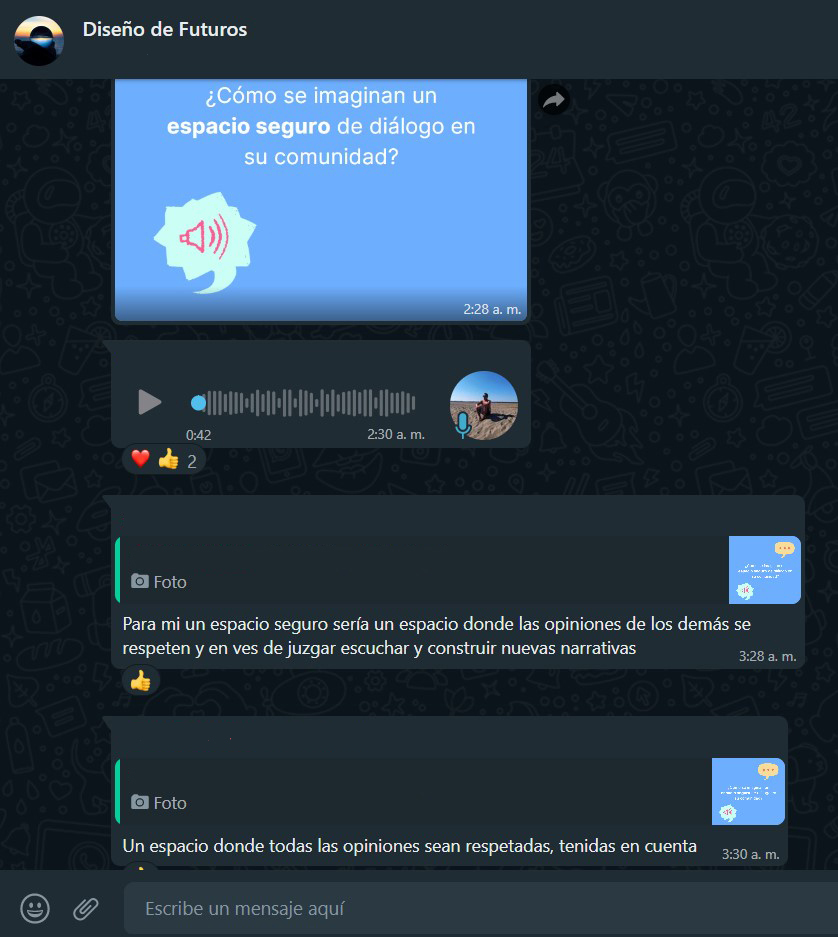
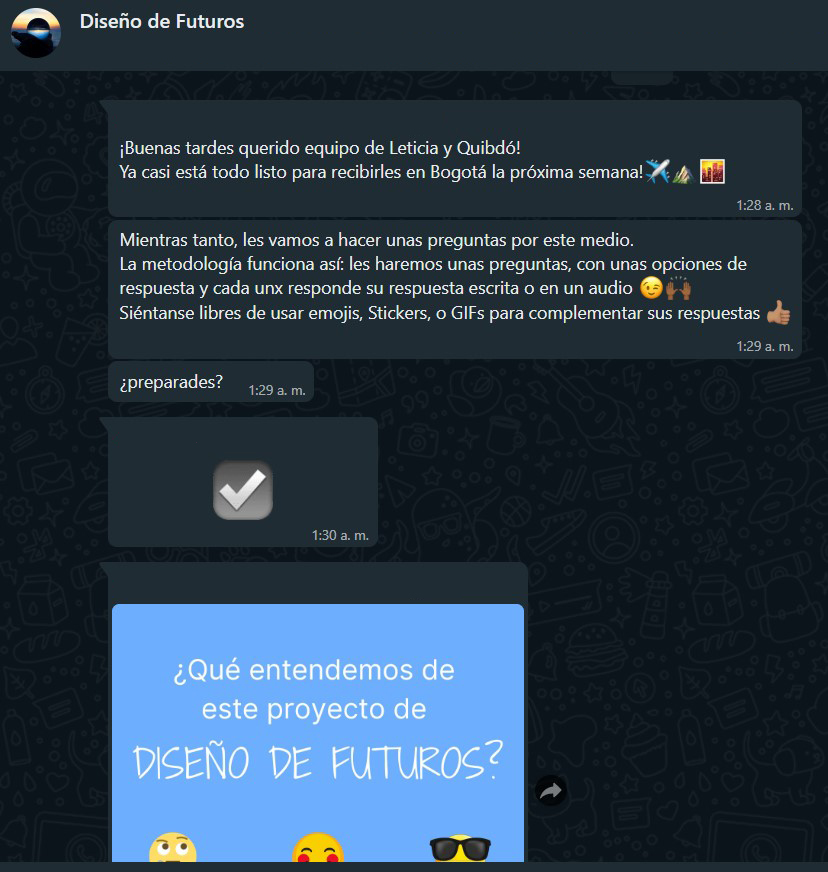
Revealed Pragmatic Adaptations to Real-World Constraints
such as innovative and flexible use of WhatsApp for equitable participation in remote territories (addressing unstable electricity/internet).
7
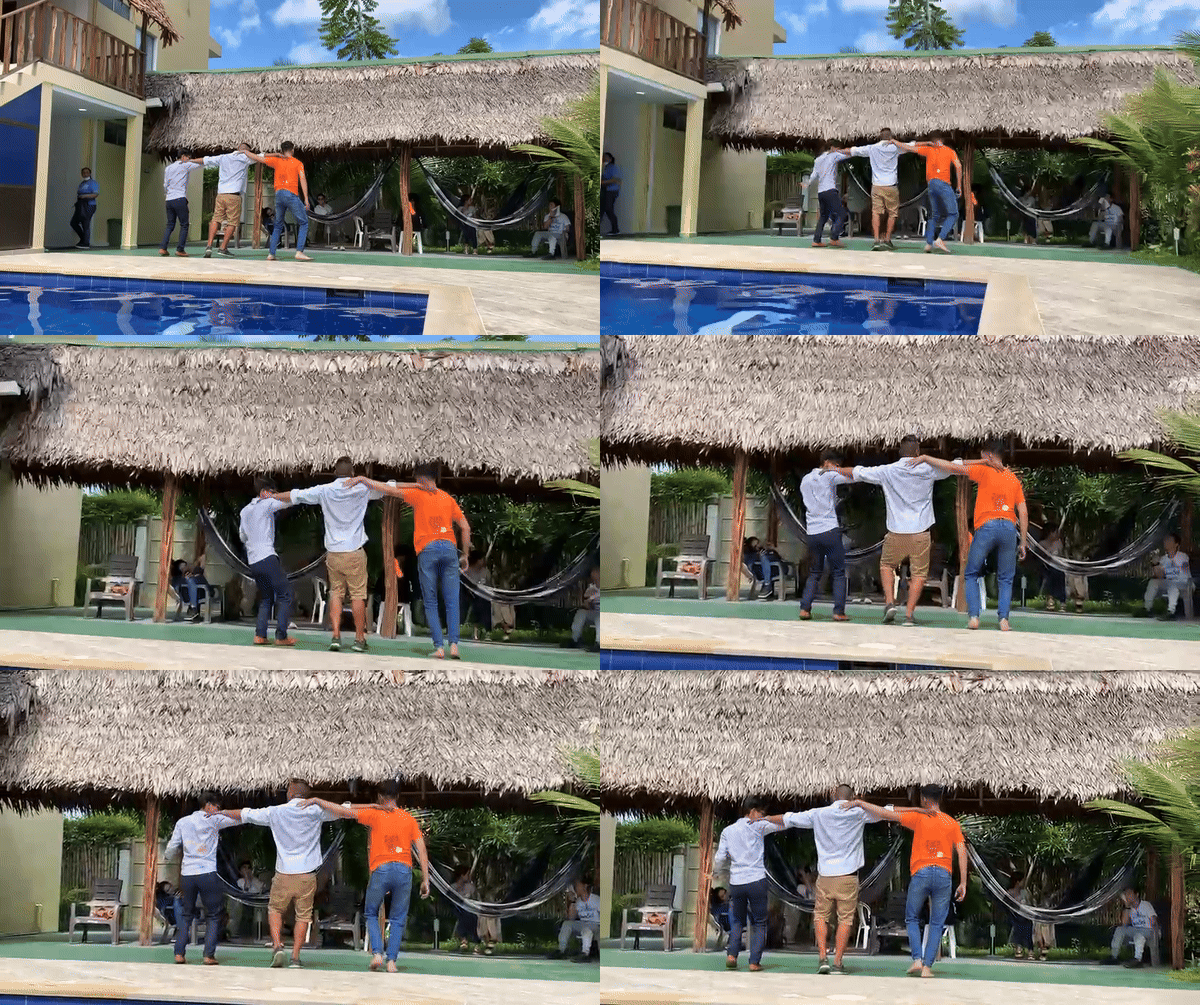
Embracing Multiple Expressions
Accepting community-created outputs like rap, dance, and storytelling as valid forms of policy input, redefining what success looks like.
8
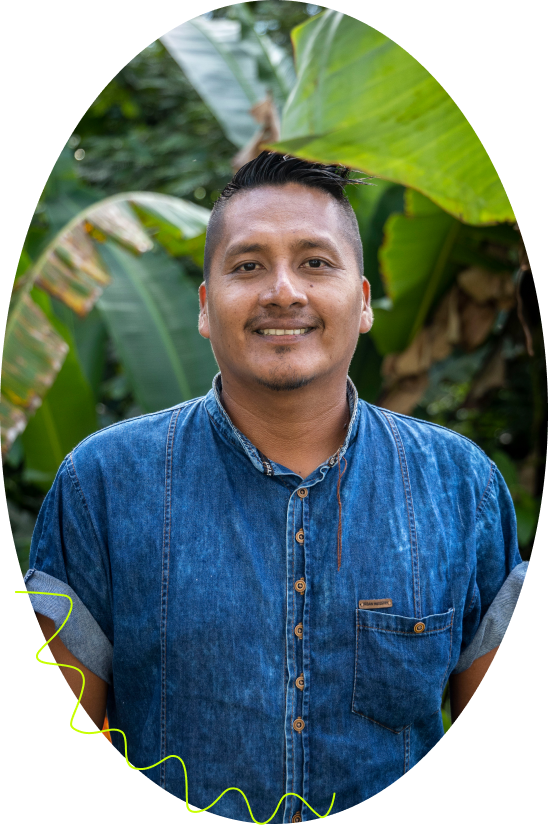
Culturally Rooted Techniques
Used locally resonant metaphors and games to make foresight accessible and meaningful.
Tejiendo Futuros
A Living Toolkit for Regeneration
As a living and shared commitment to anyone who wants to keep spreading the seeds of deep, transformative change that is rooted in participation, trust, and mindset shifts, we developed Tejiendo Futuros, a toolkit to help facilitate conversations between communities and institutions.
This toolkit includes a step-by-step guide designed to nurture participatory approaches to amplify citizens’ voices and to create a structured framework that allows for co-creating visions of change. It includes ready-to-use templates alongside blank canvases, because, as we learned through this process, each community is unique and its self-determination right must be respected to flourish and thrive in its own particular way.
What does it offer?
- Ready-to-use workshop agenda and facilitation guides
- Editable participant templates and blank canvases
- A replicable model for community-led consultation
- Step-by-step guide to visioning, dialogue, and collective action
Toolkit components:
- Tree Metaphor Canvas – connect past roots, present realities, and future dreams
- Modular Building Blocks – adapt tools to different timelines, scales, and needs
- Reflection Routines – integrate emotional, cultural, and practical insights
- Dialogue Prompts – create safe, inclusive spaces for collective imagination
- Flexible Agenda – fits 1-day, 2-day, or multi-week formats
To cultivate your own consultation process and contribute to this growing, interconnected forest of change
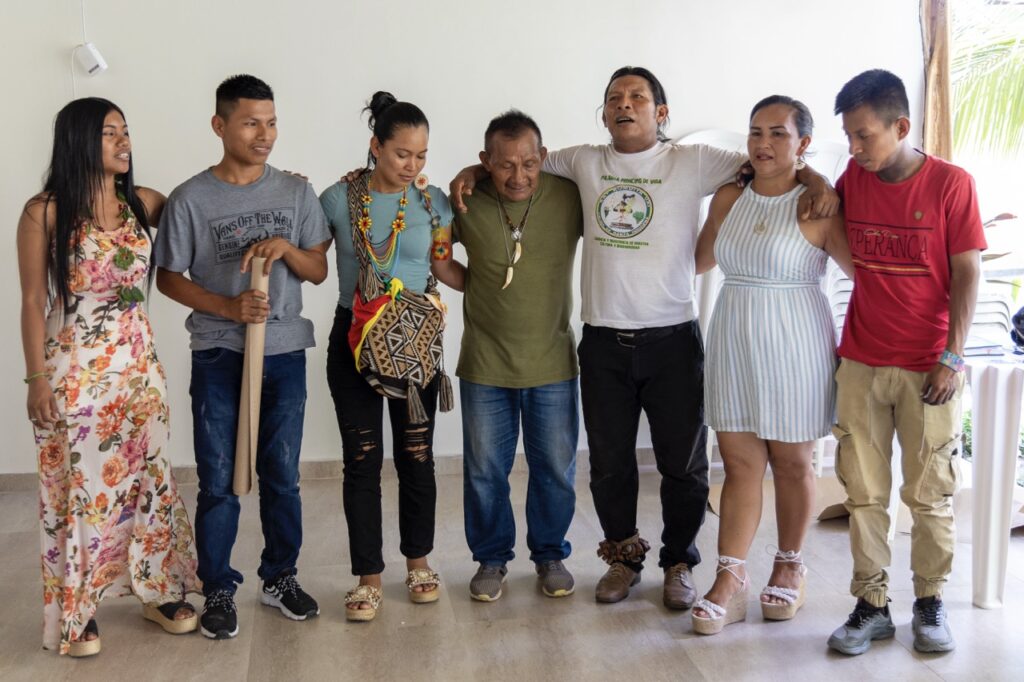
View the workshops in action
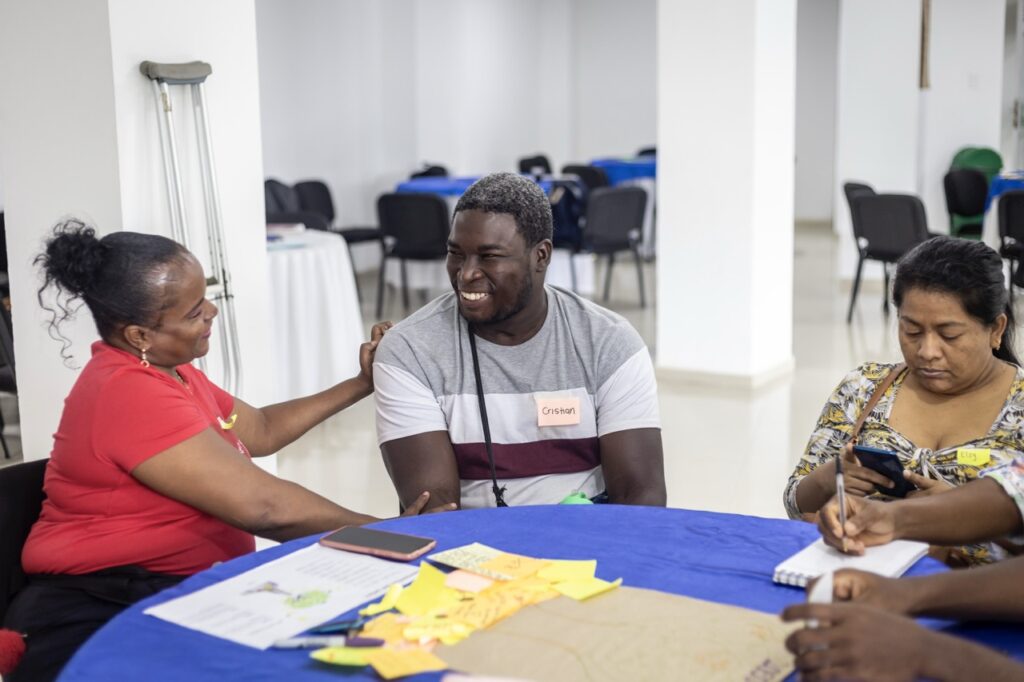
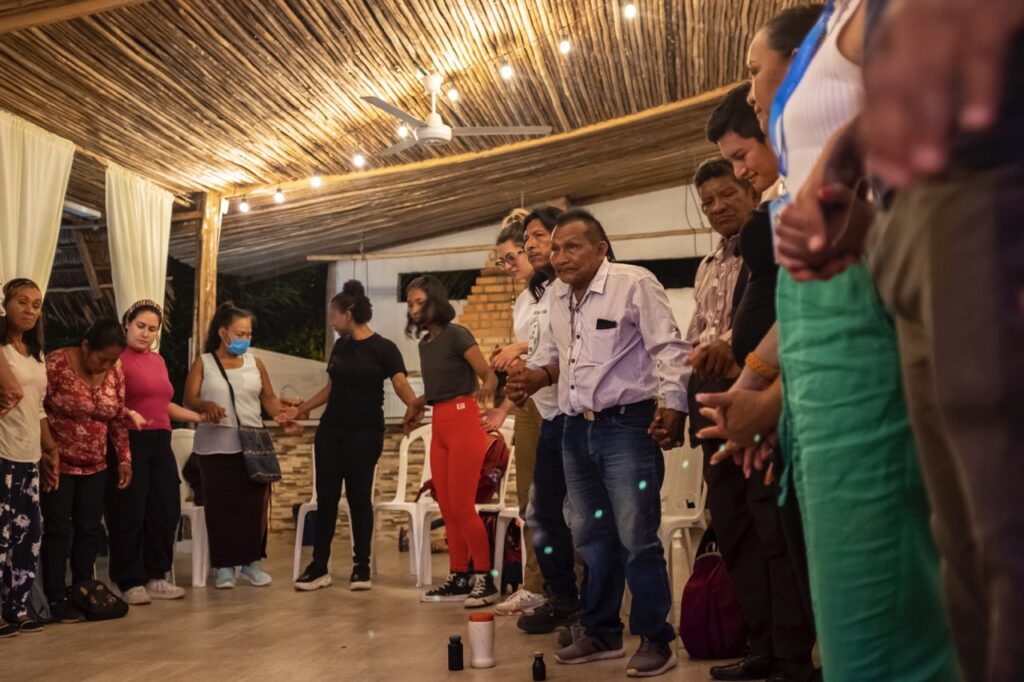
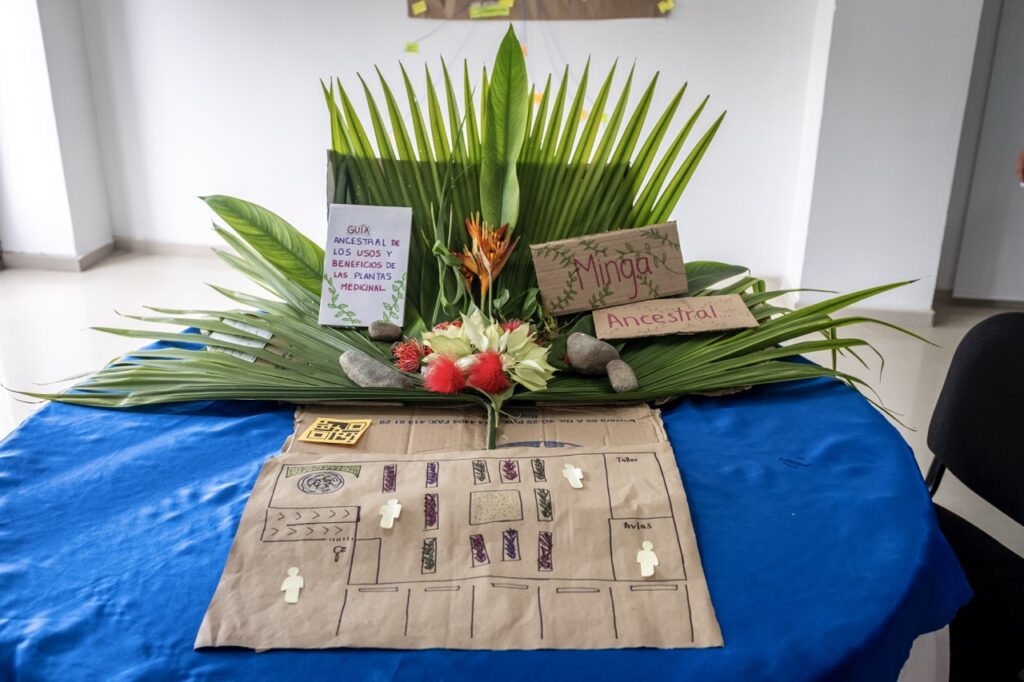
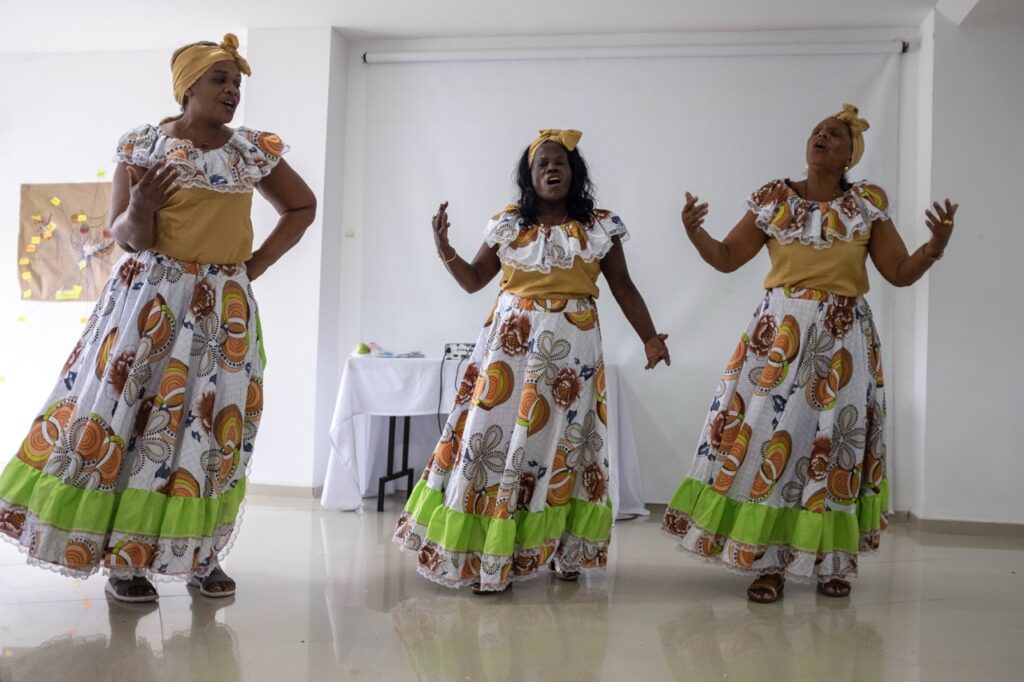
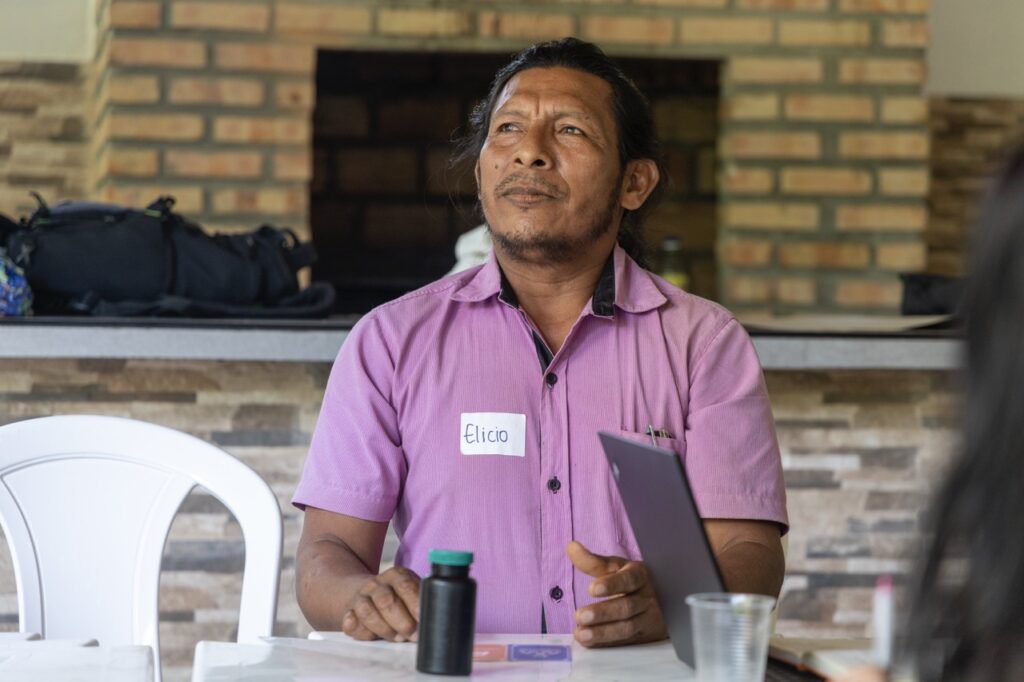
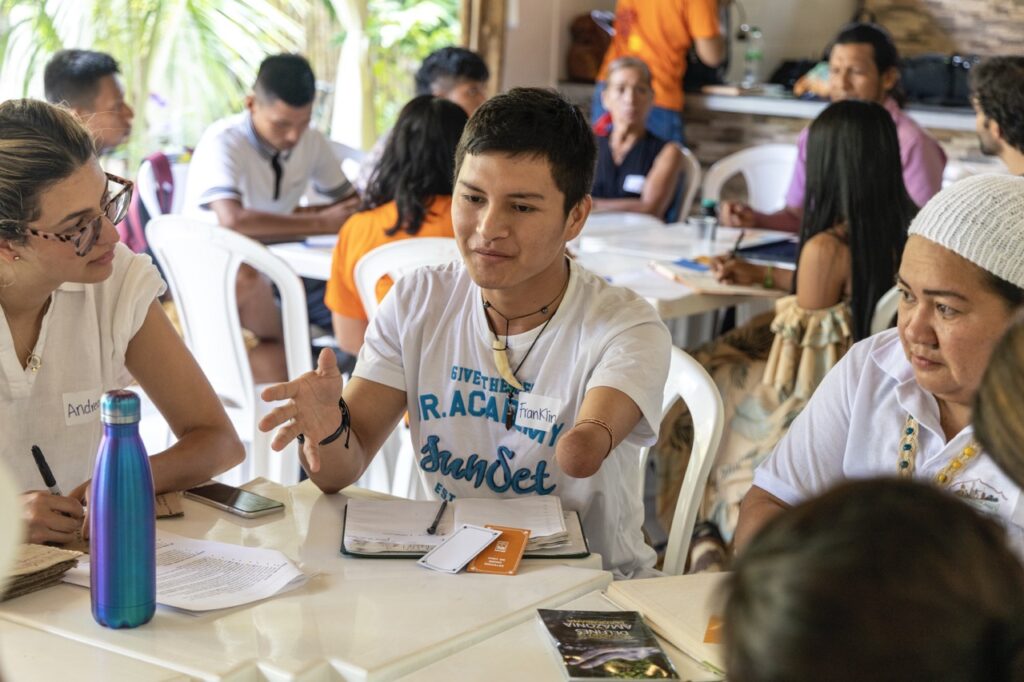
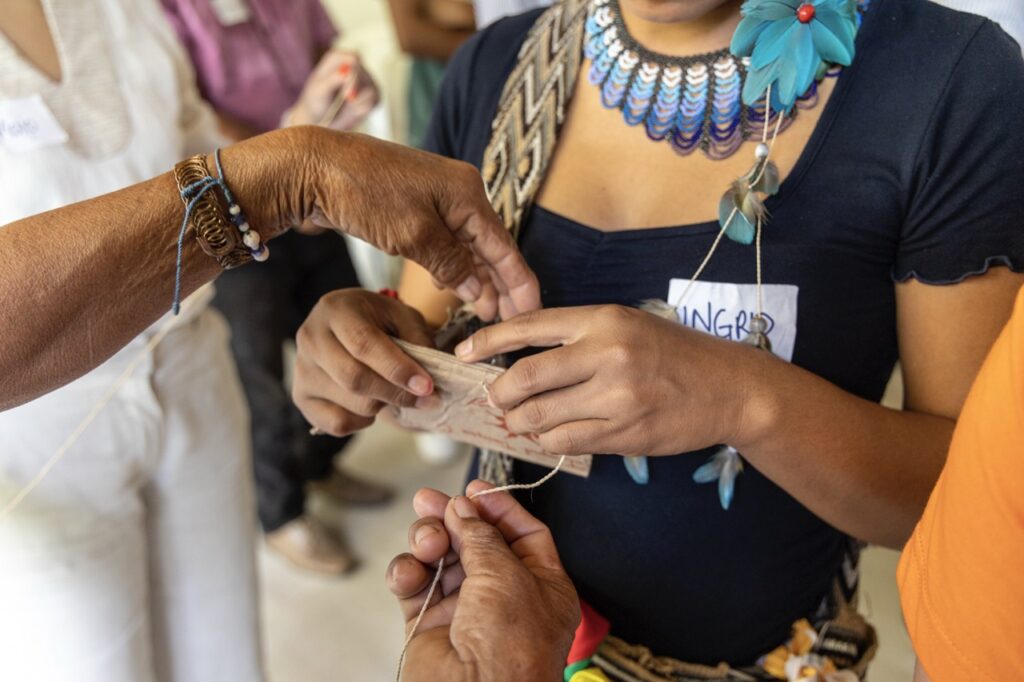
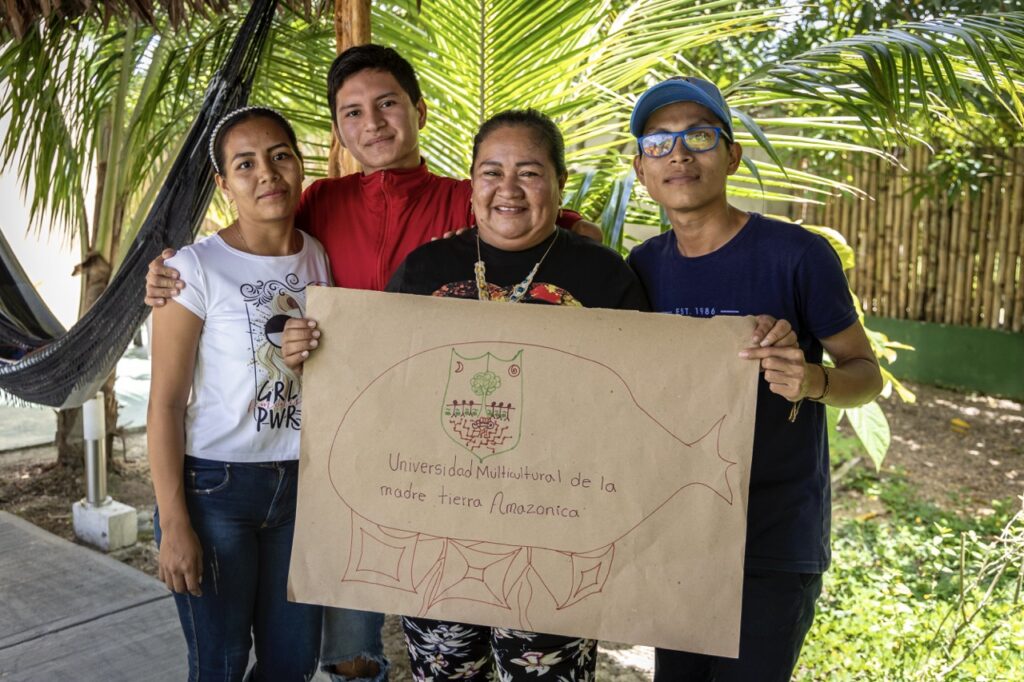
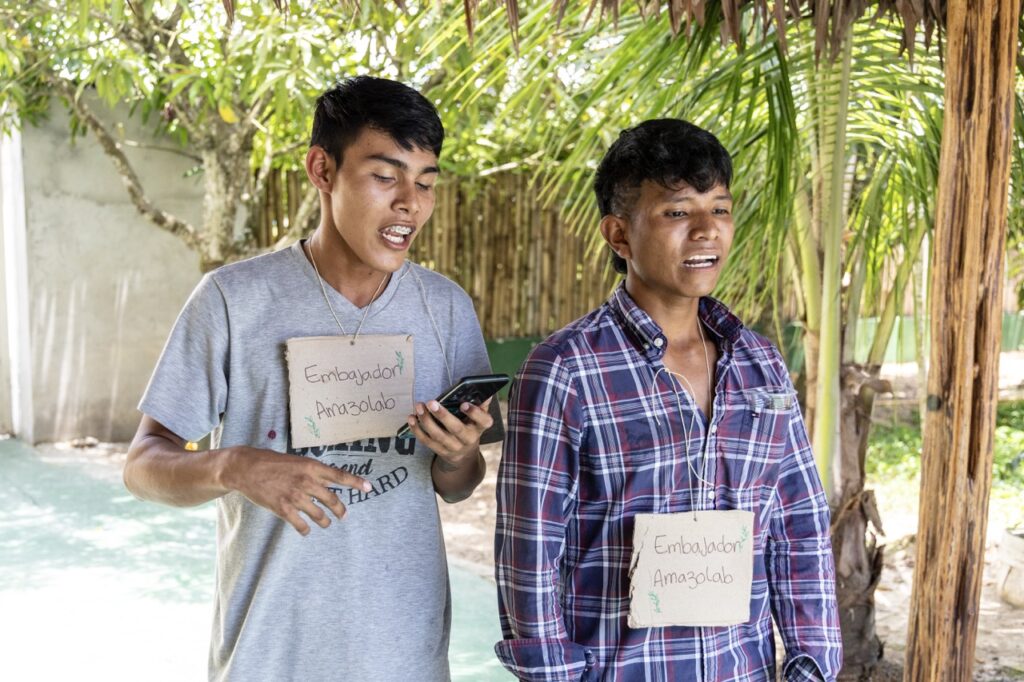
Images: ©UN Global Pulse
3
Third Movement – The Dance of Replication, Remix, and Spread
As Tejiendo Futuros took shape, its shared methodology began to resonate beyond the original territories. Much like a musical score passed from one ensemble to another, it was interpreted, re-arranged, and performed according to local needs and capacities, while preserving its core rhythm: ethical participation and collective visioning.
2022
Rooting the Practice: Leticia & Quibdó
From the biodiversity of the Amazon to the Afro-descendant cultural richness of the Pacific, the first two pilots offered fertile ground. Participants co-created shared visions rooted in peace, healthcare, and education. The process dismantled traditional top-down planning and reclaimed futures by equipping underrepresented communities to integrate ancestral knowledge and its multiple expressions as legitimate policy inputs.
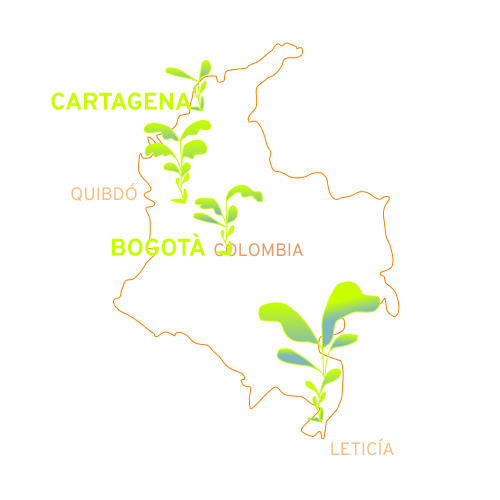
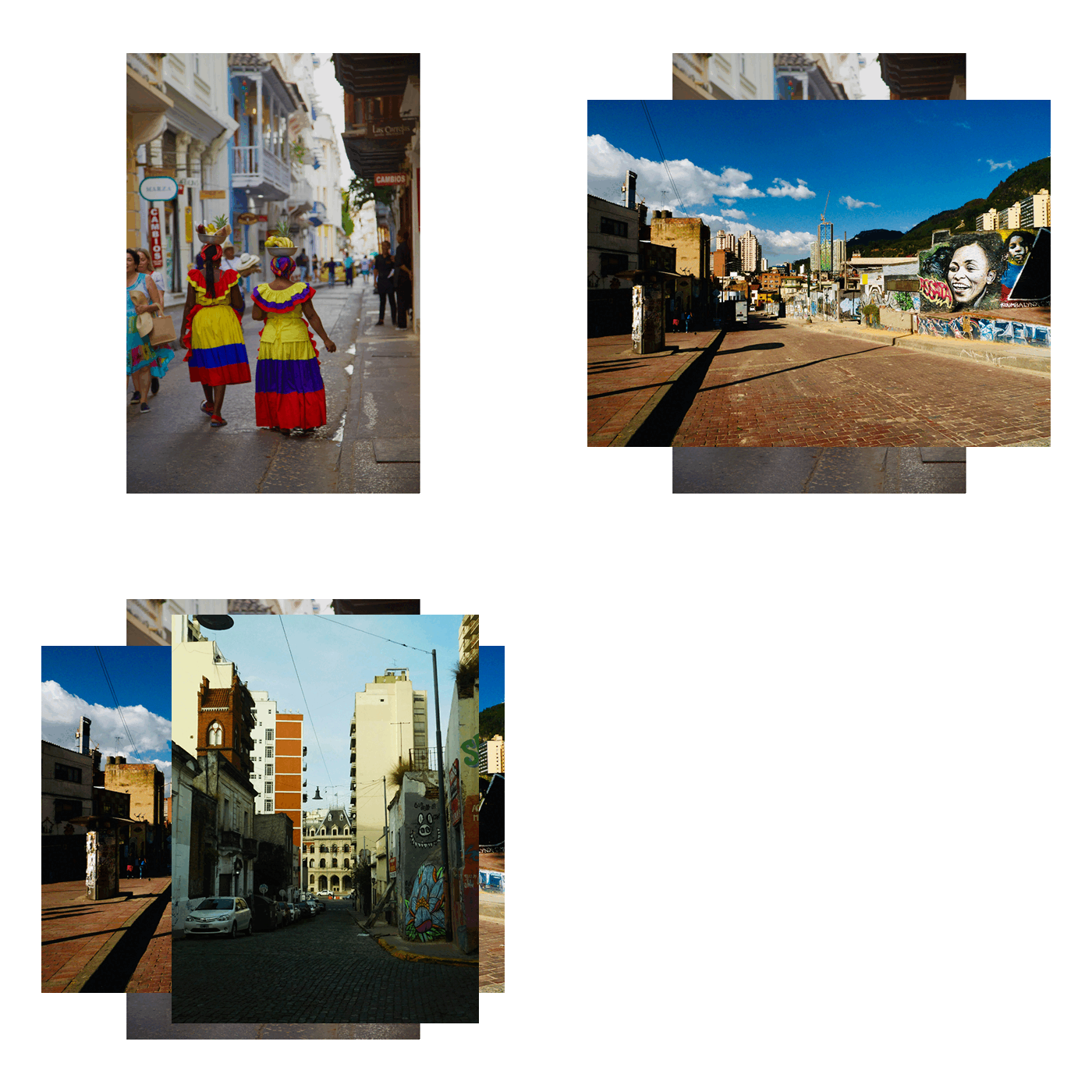
2023 Demonstrating Adaptability: Bogotá & Cartagena
UNFPA and NPD presented the Tejiendo Futuros findings and methodologies at “Interruptor 2023,” actively advocating for broader institutional support for participatory foresight. The project methodology and Toolkit were showcased in various regions, including Bogotá and Cartagena, demonstrating its low-cost replicability and effectiveness at the local level. With institutional support, the toolkit proved replicable in urban and coastal contexts, showing how participatory foresight could influence both public discourse and localized planning processes, even with limited resources.
Image credits: ©Unsplash/ (Azzedine Rouichi) (Agustín Anichini)(Jose Fuentes)
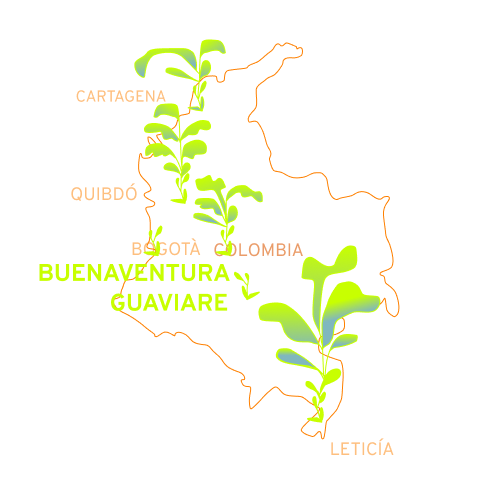
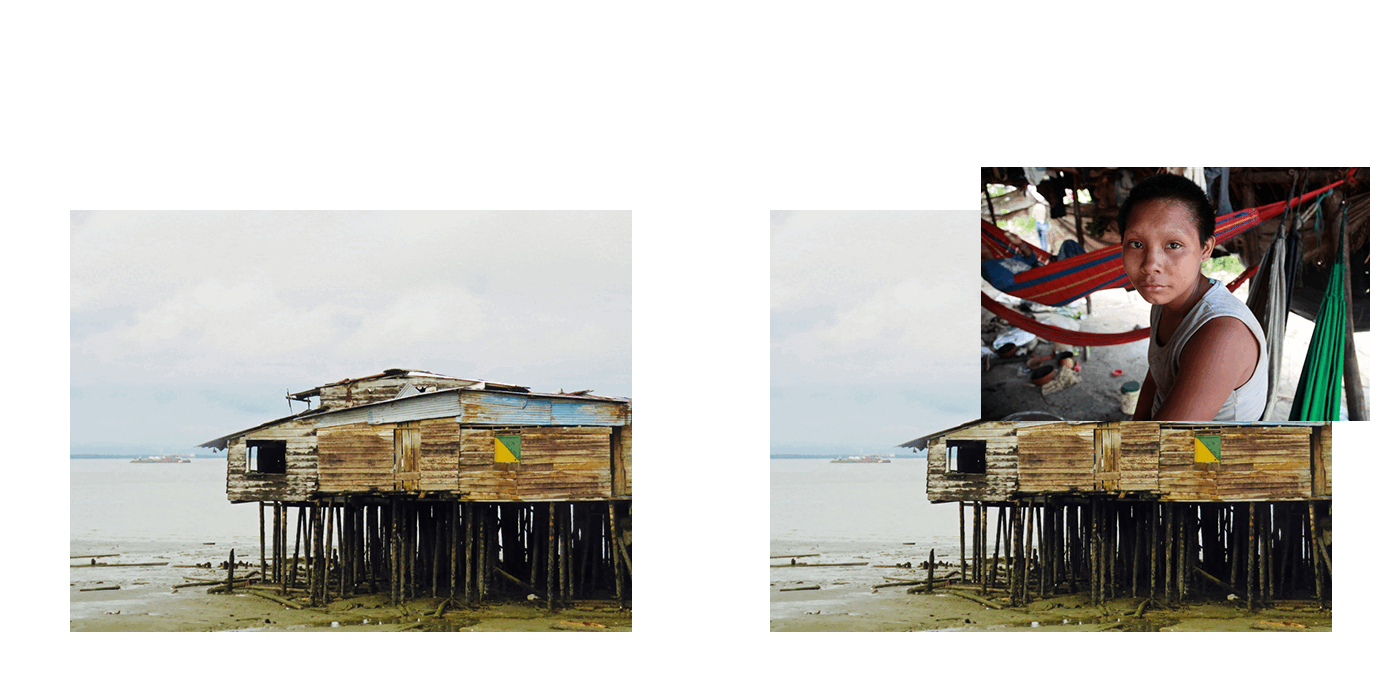
2024 Scaling Through Collaboration: Buenaventura & Guaviare
Within the Resident Coordinator’s Office’s Solution Prototyping Lab, Tejiendo Futuros was adapted by a coalition of UN agencies to design locally anchored interventions.
“This initiative shows how Tejiendo Futuros’ legacy lives on—not just in standalone projects, but in reshaping how UN agencies collaborate on localized, future-sensitive solutions.” – Yaddi Miranda Montagut, Innovation Specialist, UNFPA Colombia
Image credits: ©Unsplash/(MayJenn_,ICRC/Boris Heger)
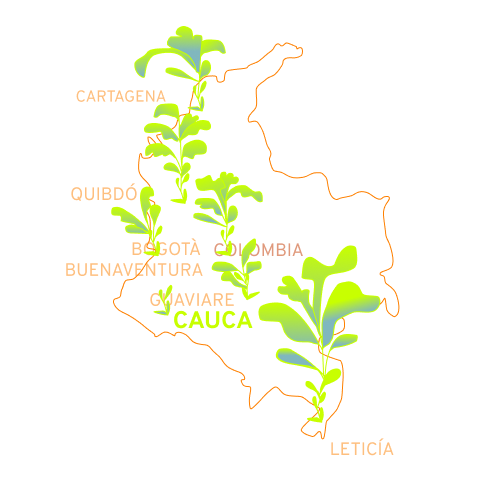
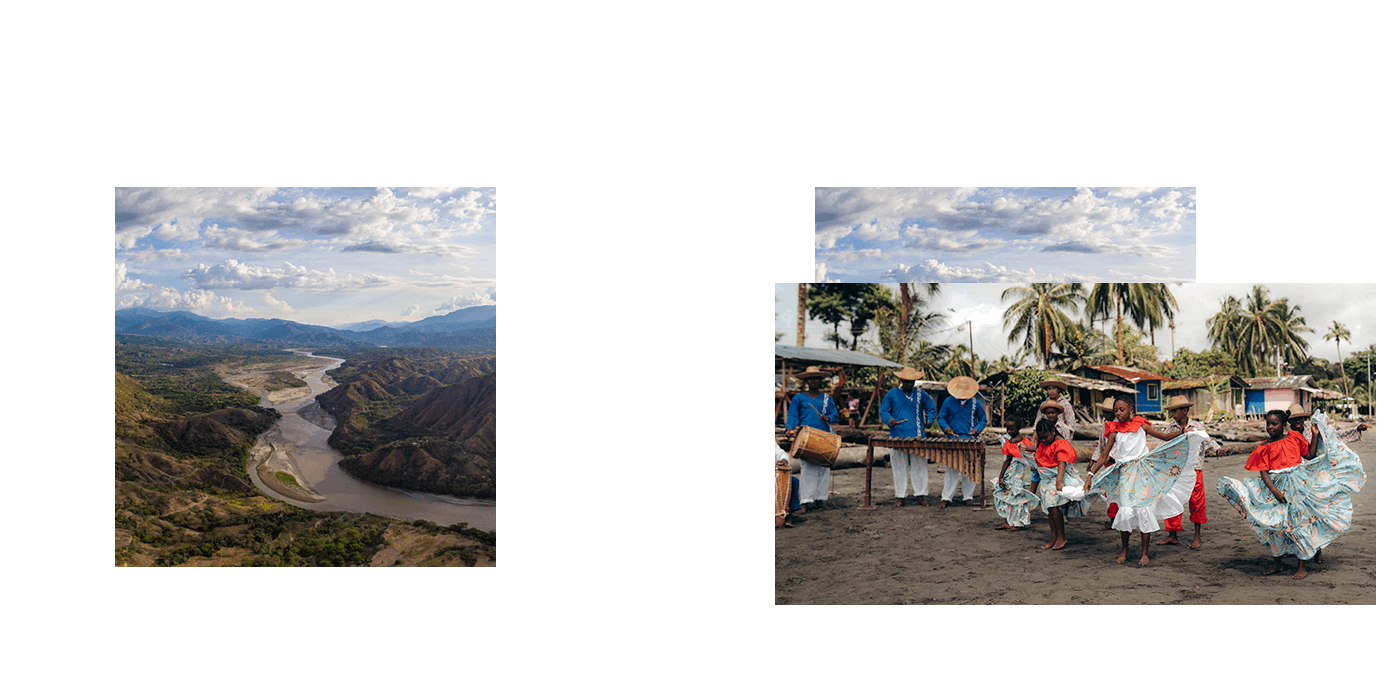
2024 Contextualizing for Peacebuilding : Cauca
The Peace in Cauca project, launching in a region marked by conflict and complexity, is directly adapting the toolkit for territorial planning. The methodology’s participatory and decolonial ethos is helping to open up collective dialogue in a sensitive, high-stakes context.
“In this project, futures visioning is explicit — it’s about territorial planning, so we’re directly adapting the toolkit methodology to make it contextual and help make dialogue more open, more collective. This commitment in project design has been key, and it’s partly due to Tejiendo Futuros’ legacy.”-María José David-Guevara, UNFPA Colombia
Image credits: ©Visit-Valle, Alexandre Laprice
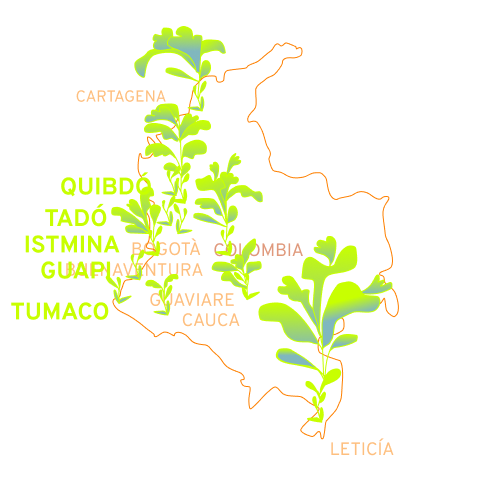
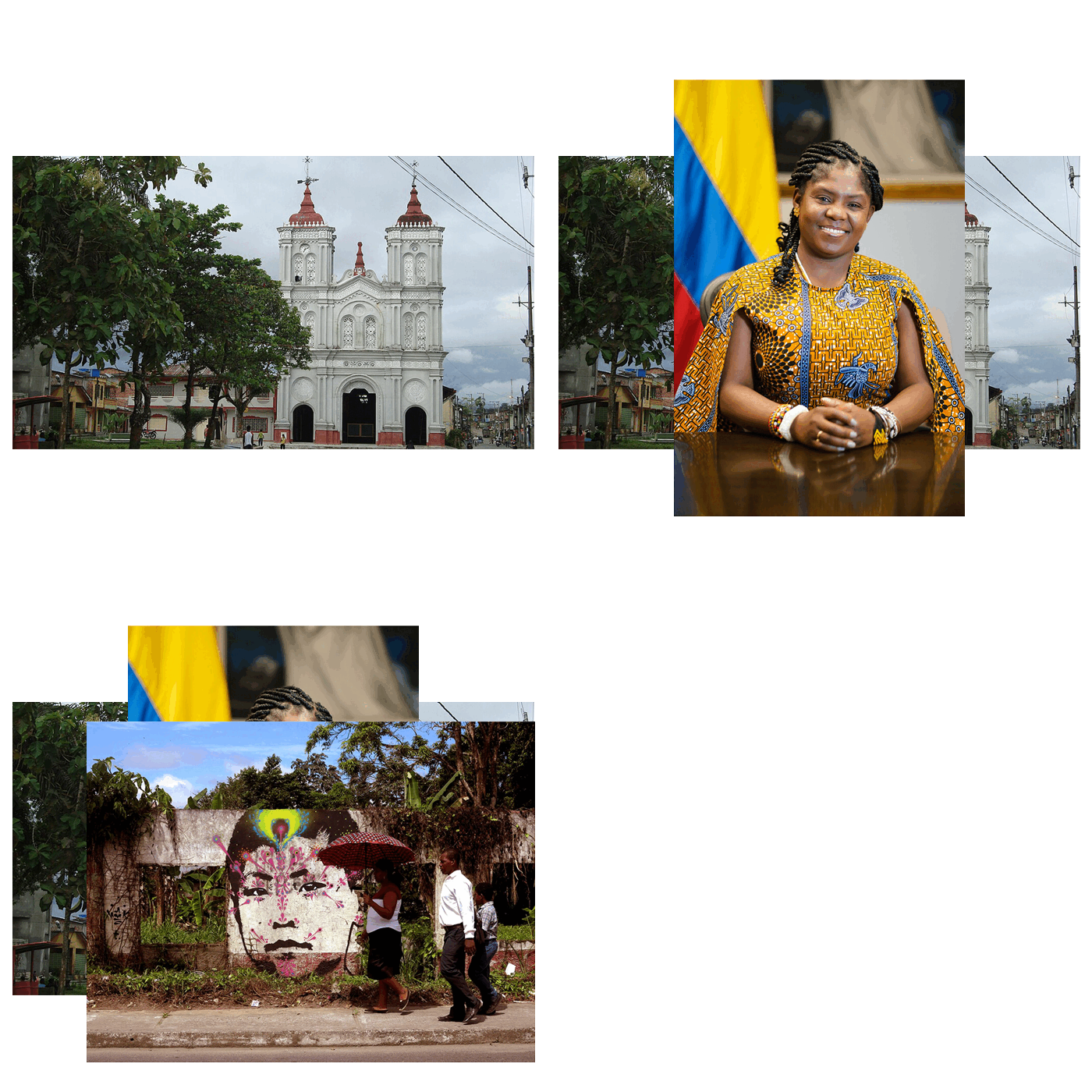
2024 Blossoming into National Planning: Quibdó, Guapi, Istmina, Tadó, and Tumaco
The National Planning Department and the Vice President’s office invited the team to train cross-departmental units working on the policy for Colombia’s Pacific region (CONPES) using the Tejiendo Futuros methodology. The approach’s core ethos: listening deeply, designing with communities, and holding space for multiple truths, is now actively shaping national policy priorities for historically marginalized populations.
“The Department is massive, with many units, and representatives from each attended our training. They loved it. For them, it was a reset: their dynamic had been strained, and Tejiendo Futuros was a fresh approach. The training style is relaxed but structured, rigorous yet engaging. They replicated it perfectly in hard-to-reach areas and now, they’re integrating findings from these sessions into the policy. This is the highest impact, directly shaping participatory policy for Colombia’s most historically marginalised populations. What proved that the methodology works? After a three-hour training, teams executed it independently in tough contexts. That’s the real test: it doesn’t depend on us!” – Yaddi Miranda Montagut, Innovation Specialist, UNFPA Colombia
Image credits: ©Wikimedia
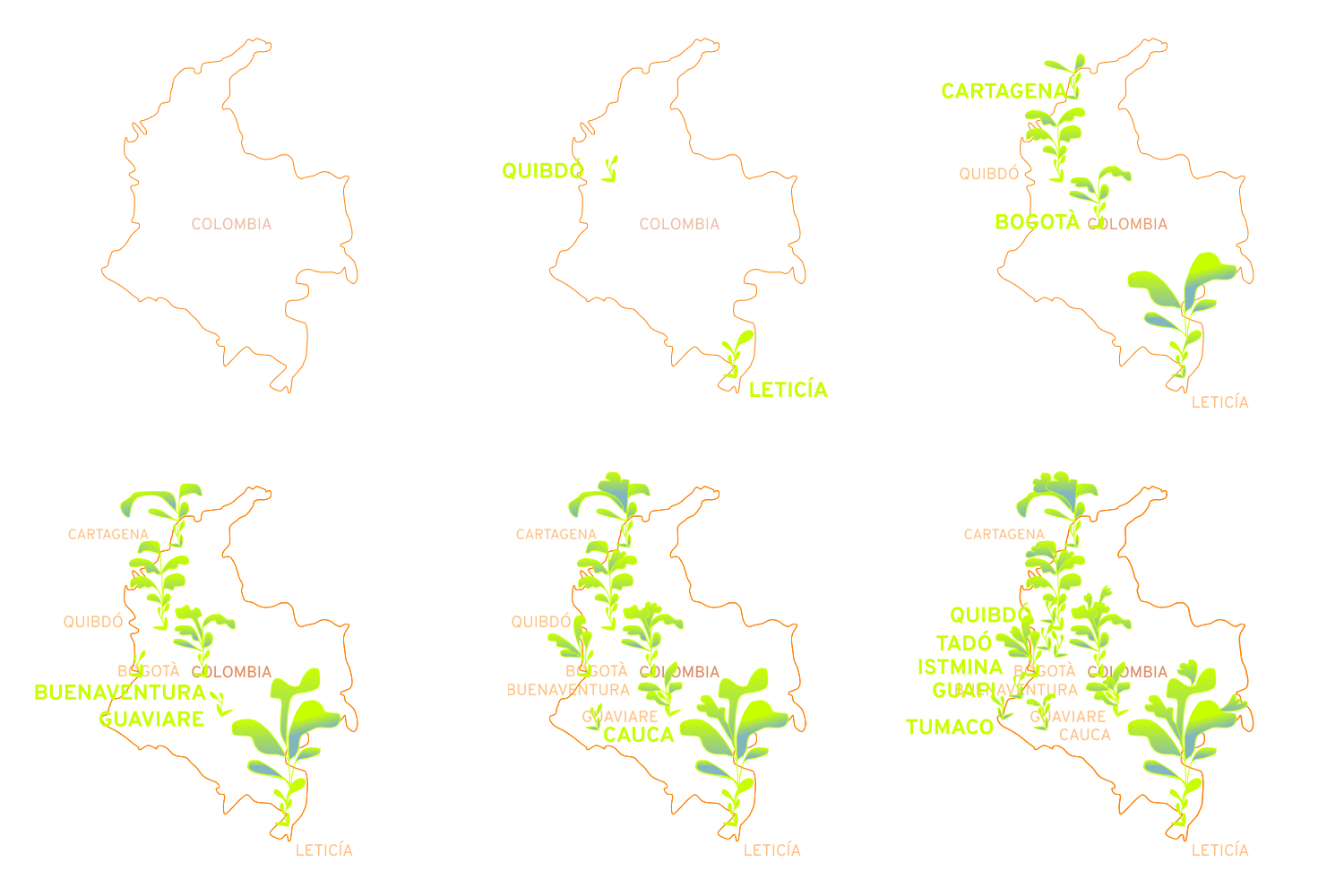
Little by little, Tejiendo Futuros had been taken up by diverse actors — not simply as a toolkit to be deployed, but as a participatory method that could be translated, owned locally and scaled up at the national level. It no longer depended on the original team, but on the resonance of its principles across scales.
In 2024, the National Planning Department (DNP) published Ejercicio Participativo de Futuros y Recomendaciones de Política Pública: the first official government document to codify the participatory foresight model piloted through Tejiendo Futuros. The publication formalised the tools, facilitation processes and territorial strategies developed during the project, signalling the transformation of the methodology from a foresight pilot into national planning infrastructure. With its release, the participatory foresight approach moved from a promising innovation to an officially endorsed planning method within the Colombian government, effectively closing the cycle from experimentation to institutionalisation.
A clear illustration of this institutionalisation is that DNP’s Public Innovation Team now includes a dedicated participatory foresight service in its official portfolio Servicios del equipo de innovación pública – Dirección de Gobierno, Derechos Humanos y Paz, directly inspired by Tejiendo Futuros and designed to help public entities across Colombia run citizen-centred futures processes that inform policy and territorial planning, ensuring the model’s sustained uptake and scalable application across the State.
What began as a pilot to democratise planning now forms part of the government’s permanent service offering. Any public institution can request support from the Public Innovation Team to implement participatory foresight in its planning processes: a legacy co-designed through participatory practice and iteration.
“As part of piloting the Public Innovation Team’s services, we designed an exclusive offering for participatory foresight — to guide other government entities through these processes. At the time, I was involved in service design for the team. One of these services was directly inspired by the Tejiendo Futuros toolkit we had co-created. Now, any government institution can request this service from the National Planning Department’s Public Innovation Team. They can ask: ‘Help us implement participatory foresight for our planning,’ and we support them in consulting citizens meaningfully. This became one of the project’s most significant institutional legacies within the government.” — Andrea Camila Lamprea Rodriguez, Superintendencia de la Economía Solidaria, Colombia Government
This is the ripple effect of care.
4
Fourth Movement – The Finale: Recommendations from Our Ecosystem to Yours
How to replicate inclusive, future-driven public innovation in your context
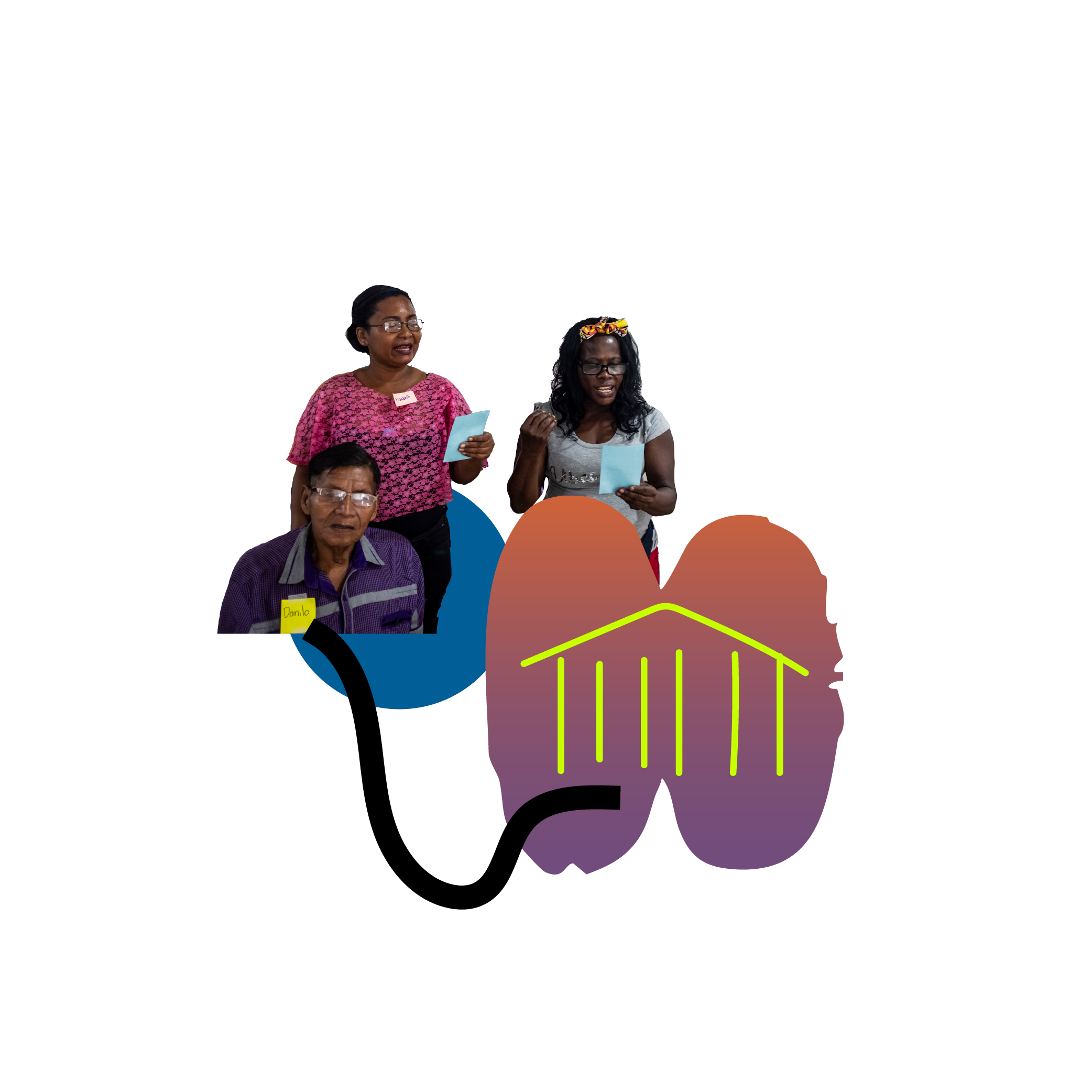
1 RETHINK HOW CHANGE IS MADE
Democratize who gets to imagine the future
Co-create visions with those most impacted, not for them
Design inclusive, context-sensitive processes that recognize diverse ways of knowing

2 BUILD WITH WHAT’S ALREADY THERE
Leverage informal communication tools (e.g. WhatsApp) for real-time collaboration
Learn from the territory — its people and environment — and start from what will resonate culturally
Keep it modular and low-cost for replicability and scale

3 CO-CREATE VISIONS, DON’T EXTRACT INSIGHTS
Involve communities in shaping content, process and results
Build feedback loops — share back outputs to reinforce ownership
Treat workshops as spaces of learning and mutual influence, not data collection

4 DESIGN FOR DIGNITY AND DIFFERENCE
Use tools that honour oral traditions, local metaphors, and creative expression
Offer multiple formats (spoken, written, visual, movement) for participation
Be flexible: adapt to territories — use local technologies and knowledge
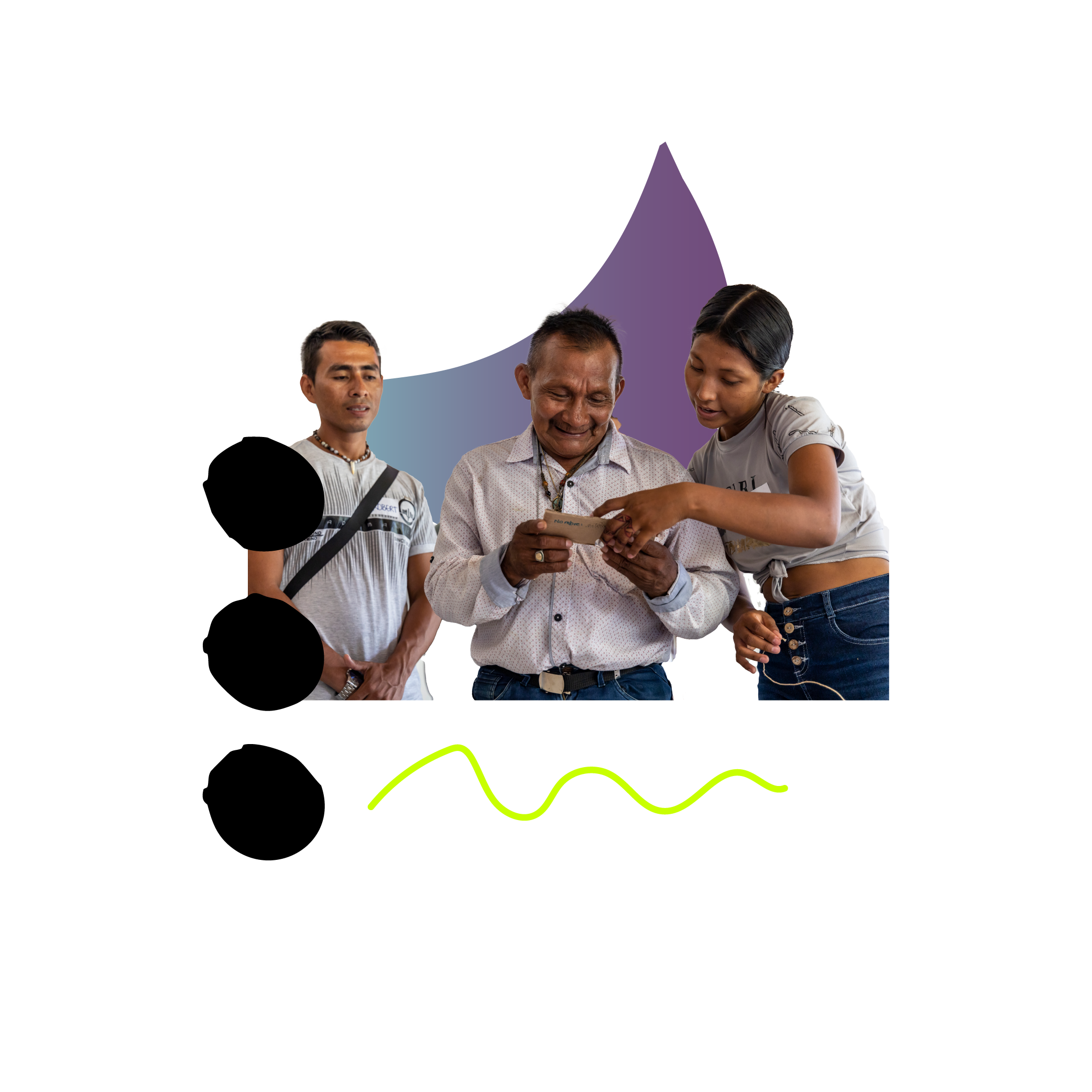
5 SHIFT POWER THROUGH PARTNERSHIP
Support government teams to become co-owners alongside communities, not just implementers or beneficiaries
Combine formal training with agile, informal accompaniment
Use foresight to foster long-term trust through participation, not just strategic outputs

6 BUILD AGILE SUPPORT SYSTEMS
Provide real-time expert advice — informal channels like WhatsApp often work best
Pair formal policy design with human support and peer learning
Think of support as scaffolding for transformation, not just implementation

7 REDEFINE WHAT SUCCESS LOOKS LIKE
Validate creative outcomes like rap, dance, performance, or visual art as legitimate expressions of vision
Celebrate mindset shifts: track how attitudes toward participation change over time
Accept that slowness, iteration, and emergence are part of deep transformation
Use multiple qualitative assessments to capture intangible impacts (trust, confidence, joy)
BONUS TIP
THINK BEYOND THE TOOLKIT
Tejiendo Futuros succeeded not just because of its tools, but because of how they were used: with care, cultural humility, creativity and continuous co-creation.
This is what turns a method into a movement.


Explore further:
RCO Colombia launched in Colombia, alongside OCHA, the Flagship Initiative (aimed at redesigning humanitarian action), in which they’ve created a manifesto to guarantee that practices of community participation should lead the transformation, recognising that they are change agents and need to be included in the planning and design process of humanitarian action from conception to end.
UN Global Pulse is the Secretary-General’s Innovation Lab. We work at the intersection of innovation and the human sciences to inform, inspire and strengthen the ability of the United Nations family and those it serves to anticipate, respond and adapt to the challenges of today and tomorrow. To learn more about our work, visit our website: www.unglobalpulse.org