



About the project
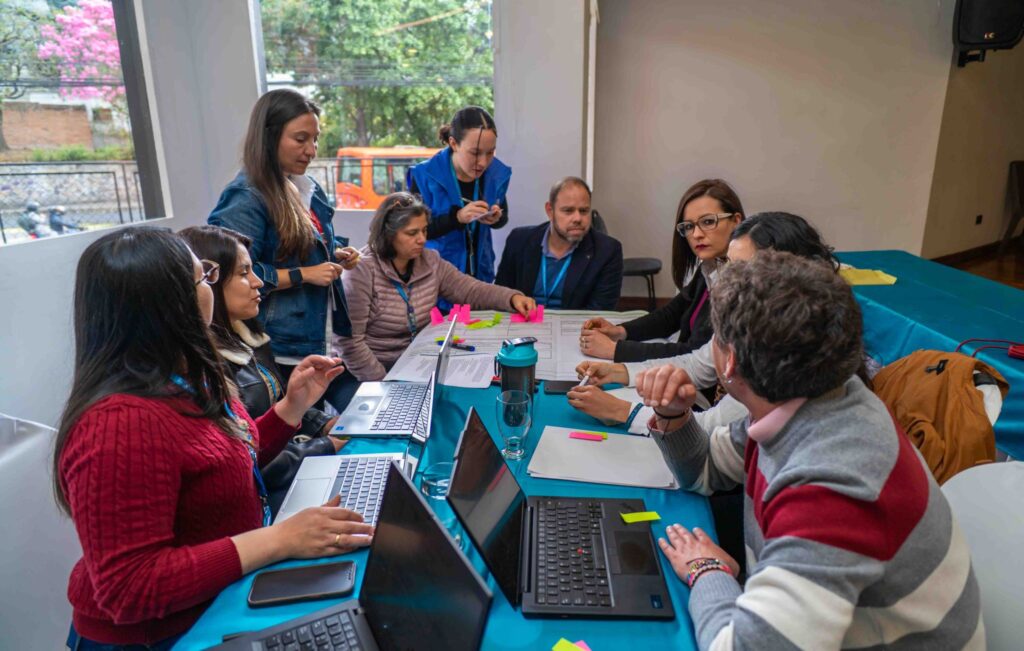
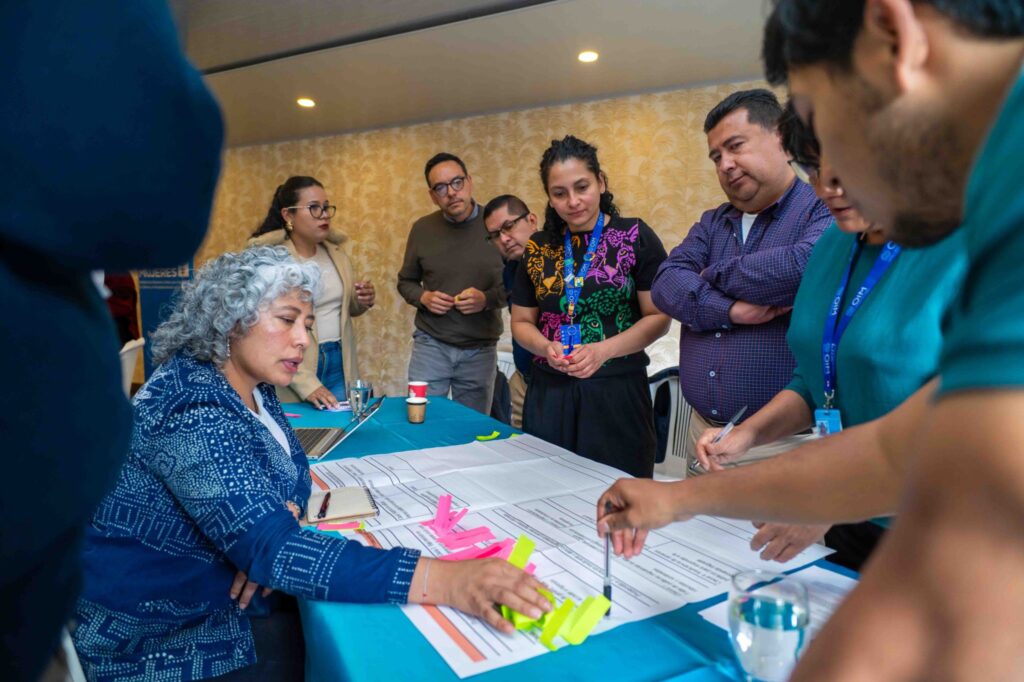
In 2025, the Resident Coordinator’s Office (RCO) in Colombia launched the Cooperation Framework (CF) Localization Initiative, designed to bring the UN Cooperation Framework to the territorial level and strengthen joint planning and programming among UN entities and local stakeholders.
Despite the successful deployment of the CF Localization Initiative across three pilot departments, the RCO identified a critical gap: the need to better understand how changes in behaviors, relationships, and coordination practices among UN entities and local stakeholders result from their new joint territorial programming approach. Traditional monitoring and evaluation frameworks were insufficient to capture these behavioral and institutional shifts, leaving open questions about what meaningful change looks like compared to previous or status quo territorial planning models.
To address this, UN Global Pulse partnered with the Resident Coordinator’s Office in Colombia to strengthen its capacity to monitor and build evidence around its transformative process to localize the planning and programming of the UN’s work, ensuring that priorities are effectively aligned with territory-specific needs and that solutions are co-developed with key local stakeholders.
The collaboration explores novel ways to measure impact—including behavioral and perceptual change— and to improve RCO’s evidence-based decision-making. Going beyond traditional monitoring and evaluation, it integrates foresight and behavioral science to help the RCO team anticipate future challenges, understand drivers of change, and generate actionable insights. The project promotes inclusive and participatory approaches, ensuring that the methods designed capture and reflect diverse community voices and stakeholder perspectives, and that these insights meaningfully shape territorial planning across Colombia.
Specifically, this collaborative project:
(i) formalized a Theory of Change for the CF Localization process, integrating qualitative and quantitative measures to track progress and demonstrate value added;
(ii) co-designed methodologies to assess qualitative dimensions of impact, including behavioral change and perceived value, among both internal UN staff and external local stakeholders; and
(iii) provided recommendations to enhance monitoring and evaluation tools in support of ongoing piloting efforts, with a focus on capturing evidence of interagency collaboration and territorial-level impact.
Our impact
Our collaboration with the Resident Coordinator’s Office (RCO) in Colombia has strengthened its capacity to monitor, analyze, and understand the results of the UN’s localization initiative—particularly in improving coordination, planning, and programming among actors at the departmental level.
Conceptual Impact: The project has also influenced a noticeable shift toward resilience-oriented thinking among UN colleagues in Colombia. Evidence is no longer viewed solely through a quantitative or reporting lens; instead, there is growing interest in behavioral, qualitative, and context-specific insights that capture how change actually happens on the ground. The RCO team has incorporated the behaviorally informed Theory of Change (ToC) that UN Global Pulse developed for them into their localization initiative package, making it part of the official documentation to be used for replication.
Structural Impact: Additionally, the initiative has begun to influence how planning and coordination may be formalized in the future. The RCO is experimenting with incorporating anticipatory thinking into planning cycles, exploring clearer coordination rhythms, and reflecting on how evidence flows across teams. This signals early movement toward more adaptive and collaborative structures that could be institutionalized over time.
Behavioural Impact: Early signals point to meaningful shifts in behavioural practices. There is increasing consideration of uncertainty, risk, and adaptation in territorial planning; closer attention to people, behaviours, and local dynamics; and greater willingness to test, learn, reflect, and adapt based on evidence.
In the longer term, this project is expected to inspire broader adoption of localized, data-informed planning approaches across Colombia and potentially in other UN country contexts, fostering more responsive, community-centered development outcomes.
Resources
About RCO Colombia: UN Country Team in Colombia
Blog: Redefining UN Territorial Planning: Insights from Colombia’s Localization Initiative.